
Pseudotephritis
Johnson, 1902
Species Guides
3- Pseudotephritis approximata(picture-winged fly)
- Pseudotephritis corticalis
- Pseudotephritis vau(picture-winged fly)
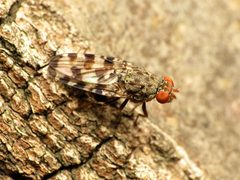
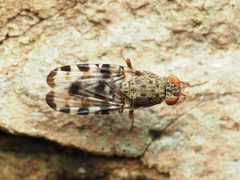
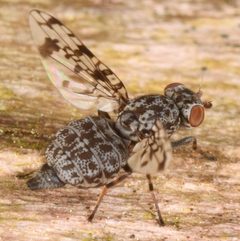
Pseudotephritis is a of picture-winged flies in the Ulidiidae, containing five described distributed across North America, Europe, and East Asia. Species in this genus are saproxylic, with larvae developing in weakened and dying deciduous trees. are typically collected in forest and are attracted to fermenting baits. The genus was established by Johnson in 1902.
Pronunciation
How to pronounce Pseudotephritis: //ˌsjuːdoʊtəˈfrʌɪtɪs//
These audio files are automatically generated. While they are not always 100% accurate, they are a good starting point.
Images
Habitat
Mixed and deciduous forests. For P. millepunctata specifically: mixed pine-birch forests (Pinus sylvestris, Betula pendula), pine forests, and deciduous forests (Quercus robur). occur in tree ; larvae inhabit weakened and dying deciduous trees.
Distribution
North America (United States: Vermont and other states), Europe (Russia: Republic of Mordovia, Far East Russia including Primorsky Krai and Amur Region), East Asia (Northeast China, Republic of Korea).
Seasonality
active June–August (based on collection records for P. millepunctata).
Life Cycle
Larvae inhabit weakened and dying deciduous trees. emerge in summer. Specific larval feeding habits have not been revealed.
Behavior
attracted to fermenting baits (beer, honey, sugar). Collected via crown traps placed at 7m height in tree .
Ecological Role
Saproxylic associated with decaying wood of weakened and dying deciduous trees.