
Rhagoletis juniperina
Marcovitch, 1915
juniper maggot fly
Rhagoletis juniperina is a tephritid fruit fly that develops as a herbivore in female cones of juniper trees, particularly Eastern red cedar (Juniperus virginiana). Larvae feed internally within cones before dropping to the soil to pupate. The serves as a for the pupal Coptera tonic. flies emerge from late summer through early fall.
Pronunciation
How to pronounce Rhagoletis juniperina: /ræɡoʊˈliːtɪs ˌdʒuːnɪpəˈriːnə/
These audio files are automatically generated. While they are not always 100% accurate, they are a good starting point.
Identification
May be distinguished from other Rhagoletis by its exclusive association with Juniperus plants rather than Rosaceae fruits. Specific diagnostic morphological characters are not detailed in available sources.
Images
Habitat
Larval stage occurs in female cones of juniper trees; pupal stage occurs in soil beneath trees. Associated with Eastern red cedar and other Juniperus .
Distribution
Continental United States and southern Canada; documented from Iowa and Michigan.
Seasonality
occurs from late July to early October.
Diet
Female cones of Juniperus , particularly Juniperus virginiana.
Host Associations
- Juniperus virginiana - larval plantEastern red cedar; primary documented
- Juniperus species - larval plantother juniper used
- Coptera tonic - pupal (Hymenoptera: Diapriidae)
Life Cycle
are deposited in female juniper cones. Larvae develop internally within cones, feeding on cone tissue. Mature larvae exit cones and burrow into soil to pupate. emerge from soil between late July and early October.
Behavior
Larvae exit cones to pupate in soil rather than pupating within cones. is synchronized with late summer to early fall activity period.
Ecological Role
herbivore of juniper cones. Serves as for pupal Coptera tonic, providing a link between plant and parasitoid .
Similar Taxa
- Other Rhagoletis speciesMost are associated with Rosaceae fruits (apples, cherries, blueberries) rather than gymnosperm cones; plant association provides primary distinction
More Details
Parasitoid biology
The pupal Coptera tonic was described as a new based on ecological association with R. juniperina and genetic differentiation from the cryptic species C. pomonellae. Parasitoids were reared exclusively from pupae floated from soil , confirming that R. juniperina pupates in soil rather than within cones.
Sources and further reading
- BugGuide
- Wikipedia
- GBIF taxonomy match
- iNaturalist taxon
- NCBI Taxonomy
- Catalogue of Life
- Description of the new species Coptera tonic (Hymenoptera, Diapriidae), a pupal parasitoid of Rhagoletis juniperina Marcovitch (Diptera, Tephritidae), and revised partial keys to Nearctic Coptera Say
- Figures 17- 18 from: Ericson HC, Forbes AA (2020) Description of the new species Coptera tonic (Hymenoptera, Diapriidae), a pupal parasitoid of Rhagoletis juniperina Marcovitch (Diptera, Tephritidae), and revised partial keys to Nearctic Coptera Say. ZooKeys 985: 49-60. https://doi.org/10.3897/zookeys.985.56974
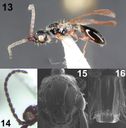
- Figures 13-16 from: Ericson HC, Forbes AA (2020) Description of the new species Coptera tonic (Hymenoptera, Diapriidae), a pupal parasitoid of Rhagoletis juniperina Marcovitch (Diptera, Tephritidae), and revised partial keys to Nearctic Coptera Say. ZooKeys 985: 49-60. https://doi.org/10.3897/zookeys.985.56974
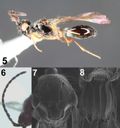
- Figures 5-8 from: Ericson HC, Forbes AA (2020) Description of the new species Coptera tonic (Hymenoptera, Diapriidae), a pupal parasitoid of Rhagoletis juniperina Marcovitch (Diptera, Tephritidae), and revised partial keys to Nearctic Coptera Say. ZooKeys 985: 49-60. https://doi.org/10.3897/zookeys.985.56974
- Figures 9-12 from: Ericson HC, Forbes AA (2020) Description of the new species Coptera tonic (Hymenoptera, Diapriidae), a pupal parasitoid of Rhagoletis juniperina Marcovitch (Diptera, Tephritidae), and revised partial keys to Nearctic Coptera Say. ZooKeys 985: 49-60. https://doi.org/10.3897/zookeys.985.56974
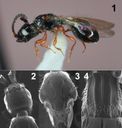
- Figures 1-4 from: Ericson HC, Forbes AA (2020) Description of the new species Coptera tonic (Hymenoptera, Diapriidae), a pupal parasitoid of Rhagoletis juniperina Marcovitch (Diptera, Tephritidae), and revised partial keys to Nearctic Coptera Say. ZooKeys 985: 49-60. https://doi.org/10.3897/zookeys.985.56974