
Procecidochares
Hendel, 1914
gall flies
Species Guides
5- Procecidochares anthracina
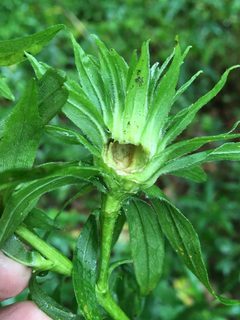
- Procecidochares atra(Goldenrod Brussels Sprout Gall Fly)
- Procecidochares flavipes
- Procecidochares gibba
- Procecidochares minuta
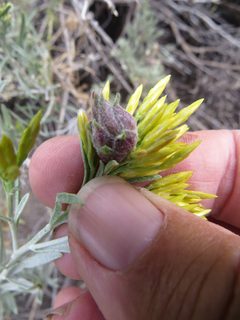
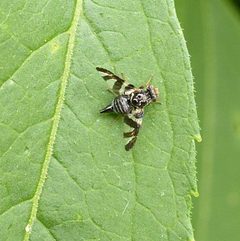
Procecidochares is a of tephritid fruit flies comprising approximately 20 described . All members are gall-formers on Asteraceae plants, with larvae developing within stem or branch galls. The genus has gained significant attention for the species P. utilis, widely deployed as a agent against the weed Ageratina adenophora. Research on Procecidochares has contributed to understanding selection genetics and mechanisms in phytophagous insects.
Pronunciation
How to pronounce Procecidochares: //proʊˌsɛsɪdoʊˈkɛəˌriːz//
These audio files are automatically generated. While they are not always 100% accurate, they are a good starting point.
Images
Distribution
recorded from North America (including Vermont, USA), South America, and Asia (Himalayan region including Nepal and Himachal Pradesh, India). Specific distribution varies by .
Host Associations
- Asteraceae - gall formationAll members form galls on Asteraceae plants; specific associations vary by
- Ageratina adenophora - gall formationPrimary of P. utilis, used in biocontrol programs
- Heterotheca - plant of P. australis per genetic study
- Machaeranthera - plant of undescribed ' A' per genetic study
Life Cycle
Gall-forming; larvae develop within plant galls on Asteraceae . Developmental stages include , larva (three instars), pupa, and . P. utilis has been observed to have shorter developmental duration when reared on versus native of its host plant.
Behavior
Females exhibit -specific oviposition with genetic basis; host selection acts as premating isolating mechanism. P. utilis rates vary by host plant age (higher on seedlings and one-year-old plants) and moisture (higher in humid conditions). Gall abundance and size in P. utilis peak at mid-elevation ranges.
Ecological Role
Gall-formers on Asteraceae; influence plant through gall induction. P. utilis serves as natural enemy/ agent for weed Ageratina adenophora. Galls act as nutrient sinks, intercepting nitrogen, phosphorus, and potassium from plants.
Human Relevance
P. utilis widely deployed as agent against Ageratina adenophora (crofton weed/Mexican devil) in Nepal, India, China, and other countries. Effectiveness varies with elevation and environmental conditions. Subject of research on mechanisms and selection genetics.
More Details
Genetics of Host Selection
Hybridization studies between P. australis and a sympatric revealed that selection for oviposition is controlled by a single major gene locus with two , with conditioning playing a complementary role. This simple genetic architecture suggests a mechanism for through host shifts.
Elevation Effects on Biocontrol
In Nepal, P. utilis gall abundance and size peak at mid-elevation ranges (approximately 1000-2000 m), with reduced performance at highest and lowest elevations where A. adenophora occurs. This elevation-dependent performance has important implications for biocontrol program design.
Chemosensory Biology
Transcriptomic analysis of P. utilis identified 133 chemosensory genes including 40 odorant-binding proteins, 29 receptors, 24 odorant receptors, 28 ionotropic receptors, 6 chemosensory proteins, and 6 proteins, providing molecular basis for location and recognition.
Sources and further reading
- BugGuide
- Wikipedia
- GBIF taxonomy match
- iNaturalist taxon
- NCBI Taxonomy
- Catalogue of Life
- Study Shows Elevation Affects Fly's Use as Natural Enemy of Invasive Weed
- Anju Poudel - Entomology Today
- Ageratina adenophora - Entomology Today
- Nepal terraces - Entomology Today
- Biocontrol Science and Technology Archives - Entomology Today
- Biology of the Gall-Former Procecidochares stonei1 on a Composite
- PARASITISM OF PROCECIDOCHARES UTILIS AND ITS EFFECT ON GROWTH AND REPRODUCTION OF EUPATORIUM ADENOPHORUM
- THE GENETICS OF HOST SELECTION AND ITS BEARING ON SYMPATRIC SPECIATION IN PROCECIDOCHARES (DIPTERA: TEPHRITIDAE)
- A new species of Pristaciura Hendel (Diptera: Tephritidae: Tephritinae:Tephrellini) and new distribution record of Procecidochares utilis Stone from Himalayas
- LIFE‐HISTORY AND BEHAVIOUR OF THE CROFTON WEED GALL FLY PROCECIDOCHARES UTILIS STONE (DIPTERA: TRYPETIDAE)
- Parasitism of Native Parasitoids on Procecidochares utilis Stone (Diptera: Tephritidae), a Biocontrol Agent of the Invasive Weed Ageratina adenophora in Uttarakhand, India
- Response of Three Hymenopteran Parasitoids Introduced for Fruit Fly Control to a Gall-Forming Tephritid,Procecidochares alani(Diptera: Tephritidae)
- Identification and preliminary characterization of chemosensory-related proteins in the gall fly, Procecidochares utilis by transcriptomic analysis
- Increased free amino acid contents of the invasive weed Ageratina adenophora and the effects on its specialist herbivore Procecidochares utilis
- De novo transcriptome analysis and identification of genes associated with immunity, detoxification and energy metabolism from the fat body of the tephritid gall fly, Procecidochares utilis
- Claroideoglomus etunicatum and Bacillus thuringiensis Affect the Growth of the Invasive Plant Ageratina adenophora and Its Defense Against the Specialist Herbivore Procecidochares utilis.