
Cecidocharini
Hering, 1947
Genus Guides
2- Procecidochares(gall flies)
- Procecidocharoides
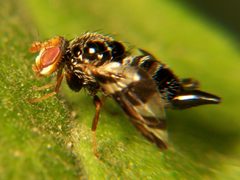
Cecidocharini is a tribe of tephritid fruit flies within the Tephritinae. The tribe contains eight recognized , including economically significant gall-forming such as those in *Procecidochares*. Members are distinguished by their association with plant galls, a trait that separates them from many other tephritid groups. The tribe was established by Hering in 1947.
Pronunciation
How to pronounce Cecidocharini: //sɛsɪdoʊkəˈraɪnaɪ//
These audio files are automatically generated. While they are not always 100% accurate, they are a good starting point.
Identification
Members of Cecidocharini can be distinguished from other Tephritinae tribes by their association with gall formation on plants. such as *Procecidochares* and *Cecidochares* are characterized by specific wing patterns and body proportions typical of gall-forming tephritids. The tribe lacks the distinctive wing markings found in some related tribes such as Dithrycini. Identification to genus level requires examination of chaetotaxy, wing venation, and male genitalia.
Images
Distribution
The tribe has a primarily Neotropical and Nearctic distribution, with some extending into the Palearctic region. *Procecidochares* are well-documented in North and South America. *Cecidochares* has been recorded from the Afrotropical and Oriental regions in addition to the Neotropics.
Host Associations
- Asteraceae - gall inductionPrimary for gall-forming such as Procecidochares and Cecidochares; larvae develop within stem and flower- galls
Behavior
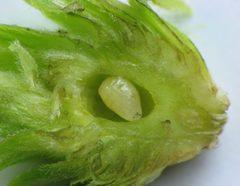
Larvae induce gall formation on plants, feeding internally within plant tissue. are typically found in association with host plants during the breeding season. Gall induction represents the primary behavioral interaction with vegetation.
Ecological Role
As gall-forming insects, members act as engineers, modifying plant architecture and creating microhabitats for other organisms. Galls may influence plant growth patterns and resource allocation. Some function as agents against weedy Asteraceae.
Human Relevance
Several , particularly in *Procecidochares*, have been investigated as agents for Asteraceae weeds such as *Ageratina adenophora* (crofton weed) and *Chromolaena odorata*. Their gall-forming habit reduces plant and reproductive output.
Similar Taxa
- TephritiniBoth are tribes within Tephritinae, but Tephritini typically infest fruits and flower directly rather than inducing true galls; wing patterns and larval differ
- DithryciniDithrycini often have more elaborate wing patterns with distinct bands or spots, and generally do not form galls; Cecidocharini show reduced wing patterning and obligate gall association
More Details
Genera composition
The tribe comprises eight : Cecidocharella, Cecidochares, Hetschkomyia, Neorhagoletis, Ostracocoelia, Procecidochares, Procecidocharoides, and Pyrgotoides. Procecidochares is the most extensively studied due to its economic importance in weed biocontrol.
Gall morphology
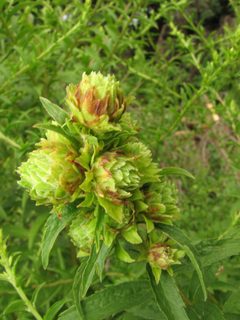
Galls induced by Cecidocharini are typically irregular swellings on stems, petioles, or within flower . The structure and location of galls vary by and , with some forming rosette-like distortions of meristems.