
Pogonortalis
Hendel, 1911
signal flies
Species Guides
1- Pogonortalis doclea(Boatman Fly)
Pogonortalis is a of signal flies ( Platystomatidae) containing approximately seven described . Members of this genus are found primarily in the Australasian region. The genus was established by Hendel in 1911. Species within Pogonortalis share the characteristic features of Platystomatidae, including prominent patterned wings used in signaling displays.
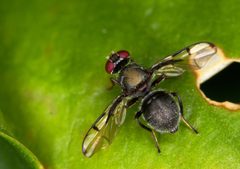
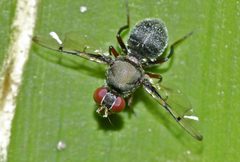
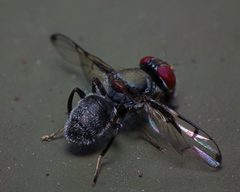
Pronunciation
How to pronounce Pogonortalis: /ˌpoʊɡəˈnɔrtəlɪs/
These audio files are automatically generated. While they are not always 100% accurate, they are a good starting point.
Images
Distribution
Australasian region, including Australia and surrounding areas. Specific distribution varies by .
Behavior
Males of at least some (notably P. doclea, the "boatman fly") perform elaborate wing-waving displays to attract females, a characteristic of Platystomatidae.
Human Relevance
P. doclea (boatman fly) is known to humans due to its distinctive and common occurrence in Australia. No significant economic or medical importance has been documented for this .
Similar Taxa
- Other Platystomatidae generaPogonortalis can be distinguished from related by specific genitalic and wing venation characters, though precise identification requires examination.
More Details
Etymology
The name likely derives from Greek roots referring to the beard-like (pogono-) and nose/orientation (-rtalis) features, possibly alluding to facial characteristics of .
Taxonomic history
Established by Friedrich Hendel in 1911. The has been revised by Australian dipterists including Paramonov (1958), McAlpine (2007), and Schneider & McAlpine (1979).