Pogonortalis doclea
(Walker, 1849)
Boatman Fly
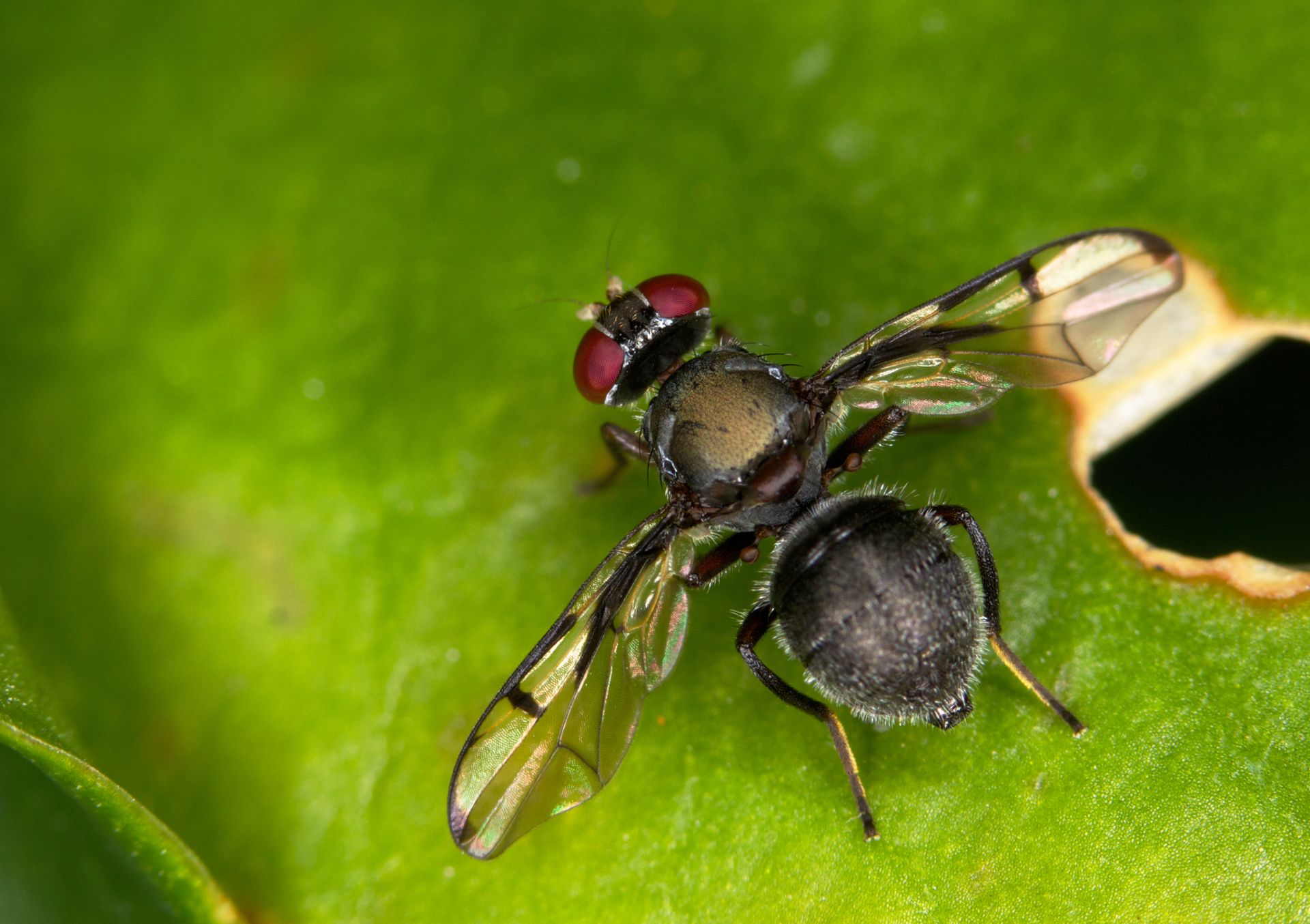
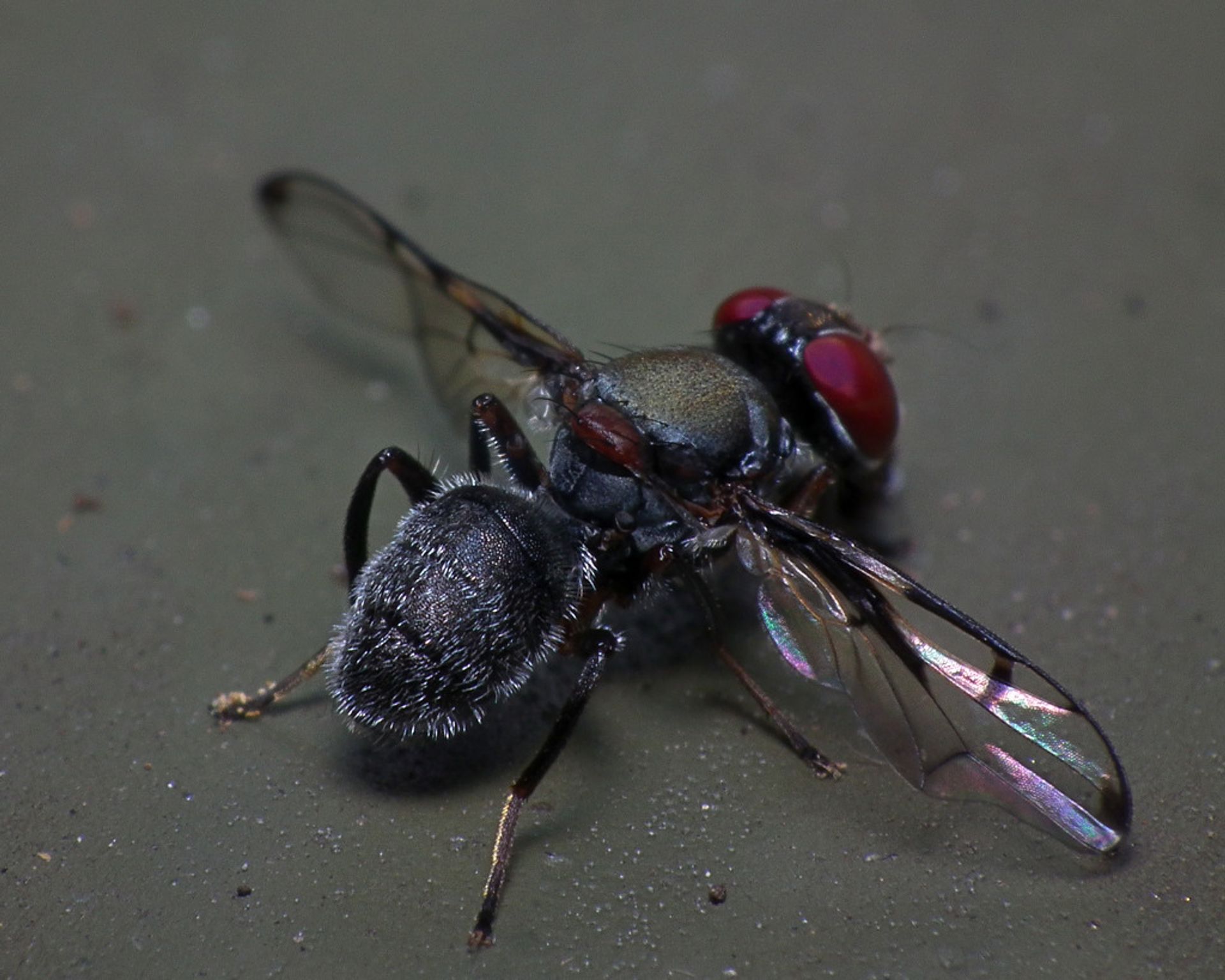
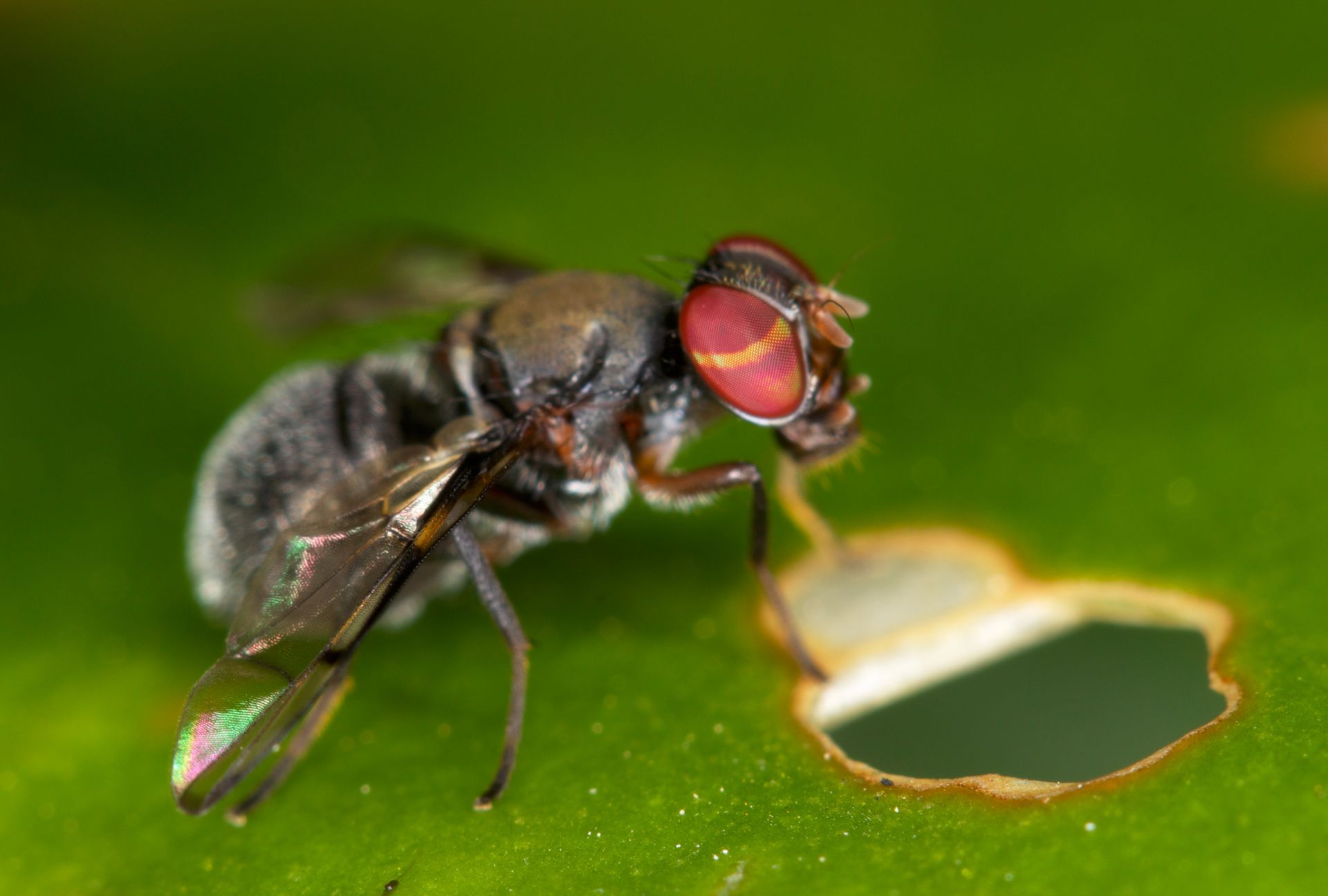
Pogonortalis doclea, commonly known as the boatman fly, is a signal fly in the Platystomatidae. Native to Australia, it has been introduced to California and is frequently observed in gardens. The exhibits distinctive wing-waving and in bristle structure.
Pronunciation
How to pronounce Pogonortalis doclea: /ˌpoʊɡoʊˈnɔrtəlɪs ˈdɒkliə/
These audio files are automatically generated. While they are not always 100% accurate, they are a good starting point.
Identification
Distinguished from other Pogonortalis by the combination of: cheek height below less than 10% of eye height, hind with anteroventral keel at third, and crossvein meeting 4 before mid-length of . in cheek bristles allows easy sex determination: males with bundle of long curved bristles, females with single short bristle among small hairs.
Images
Habitat
Commonly found in Australian gardens. Introduced established in California, United States.
Distribution
Native to Australia. Introduced to California in the United States. Distribution records confirm presence in the conterminous 48 United States.
Diet
feed on fresh mammalian .
Behavior
Wings are waved in a motion resembling the rowing of oars on a boat, giving rise to the . Males engage in -to-face pushing contests.
Human Relevance
Attracted to fresh mammal in garden environments, making it a readily observable for naturalists. Introduced in California provides opportunities for study of non-native dipteran establishment.
Similar Taxa
- Other Pogonortalis speciesShare -level characteristics of cheek structure, hind keel, and wing venation; require careful examination of specific measurements and bristle patterns for differentiation.
More Details
Sexual dimorphism
Males show two distinct forms of dimorphism: in bristle structure (bundle of long curved bristles vs. female's single short bristle) and in head shape ( widening in larger males).