
Palloptera
Fallén, 1820
flutter flies
Species Guides
3Palloptera is a of flutter flies (Diptera: Pallopteridae) containing approximately 30–33 described . are characterized by rapid, trembling wing movements. Larval feeding modes vary: most species are saprophagous, feeding on biofilms on plant surfaces, while at least one species (P. scutellata) is phytophagous, developing inside rush stems. The genus occurs primarily in Europe, though adult detection is challenging and distributions are likely underestimated.
Pronunciation
How to pronounce Palloptera: /pəˈlɒptərə/
These audio files are automatically generated. While they are not always 100% accurate, they are a good starting point.
Identification
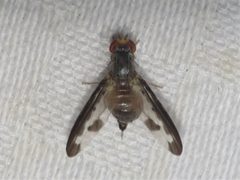
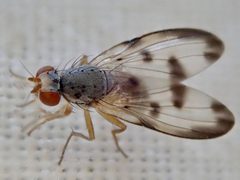
identified by characteristic trembling wing and, in some , spotted wing patterns. P. scutellata specifically shows four wing spots. Larvae require microscopic examination: species separated by skeleton structure, locomotory spicules, and respiratory organ . Five European species have unique larval character states allowing definitive identification.
Images
Habitat
Associated with vegetation: most inhabit flowerheads and stems of plants, with larval development dependent on rain-maintained biofilms on plant surfaces. P. scutellata occurs in warm, sheltered locations specifically associated with Soft Rush (Juncus effusus).
Distribution
Primarily European. Recorded from Denmark, Norway, Sweden, Great Britain, Northern Ireland, Germany, the Netherlands, and Belgium. P. scutellata first recorded in UK in 1950, with range expansion to Scotland (2015) and Belgium. Actual distributions likely broader but underestimated due to difficulty capturing , particularly males.
Seasonality
timing varies by . P. scutellata females emerge in autumn, mate, and overwinter in the mated state. Most other European species have larvae that develop primarily during autumn and winter.
Diet
Larvae primarily saprophagous, feeding on biofilms on plant surfaces; zoophagy, when observed, appears accidental rather than primary feeding mode. P. scutellata larvae are phytophagous, feeding inside stems of Soft Rush (Juncus effusus).
Host Associations
- Juncus effusus - larval Soft Rush; stems used for larval development and oviposition by P. scutellata
Life Cycle
Development occurs in autumn and winter for most . Larvae progress through three instars; third stage larvae and described for several species. P. scutellata exhibits an unusual within the : females emerge in autumn, mate, and overwinter as , rather than larvae . Females use a long piercing ovipositor to lay in plant stems.
Behavior
display rapid, trembling wing movements (fluttering) characteristic of the . This is often the most conspicuous field sign of presence.
Ecological Role
Larvae function as decomposers through saprophagy, processing biofilm material on plant surfaces. P. scutellata acts as a phytophage in rush stems. Early stages are important for accurate biodiversity assessments, as capture rates are poor indicators of actual abundance.
Human Relevance
No direct economic or medical significance. Interest primarily entomological and ecological. of P. scutellata sequenced (415.6 Mb assembly), contributing to dipteran genomic resources.
Similar Taxa
- Other Pallopteridae generaShare trembling wing ; distinguished by wing venation, body proportions, and larval where known
- Tephritidae (picture-winged flies)Some have spotted wings; distinguished by wing pattern details, lack of trembling , and different larval
Misconceptions
Larvae were historically considered zoophagous; observations and feeding tests indicate saprophagy is the primary mode, with zoophagy accidental.
More Details
Research challenges
Palloptera, especially males, are difficult to capture using standard methods, leading to underestimation of distributions and abundance. Incorporating early stages (larvae and ) into surveys provides more reliable biodiversity data.
Taxonomic resources
Morphological keys to third-stage larvae and exist for seven European , facilitating identification of early stages in field .