
Silba
Macquart, 1851
lance flies
Species Guides
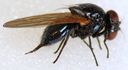
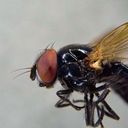
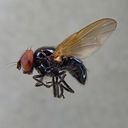
1Silba is a of lance flies in the Lonchaeidae, containing more than 120 described . The genus has a distribution, occurring on every continent except South America and Antarctica. Species within Silba exhibit diverse larval development strategies, with some species associated with figs (including the economically significant pest Silba adipata), while others develop in flower buds, fungal fruiting bodies, or other substrates. The genus is taxonomically active, with numerous new species described in recent decades, particularly from the Afrotropical and Asian regions.
Pronunciation
How to pronounce Silba: /ˈsil.ba/
These audio files are automatically generated. While they are not always 100% accurate, they are a good starting point.
Identification
Members of Silba can be distinguished from other Lonchaeidae by features of the male genitalia, which are frequently used in -level . The Silba admirabilis species group is characterized by partly yellow tarsomeres combined with distinctive male genitalia structures. Specific identification typically requires examination of male terminalia; keys and illustrations are available for species groups.
Images
Habitat
vary considerably among . Some species develop in fig fruits (Ficus spp.), including both male and female figs. Silba ischnopoda develops in mature male figs of Ficus ischnopoda. Silba mitsuii larvae occur in flower buds of Camellia japonica. Silba fungicola develops in fungal fruiting bodies. The pest Silba adipata is associated with cultivated and wild figs in Mediterranean-type climates.
Distribution
; recorded from every continent except South America and Antarctica. Specific distribution records include: Mediterranean region, southern Europe, North Africa, Middle East, South Africa, Mexico, southern California (USA), Thailand, Cambodia, Japan, and Afrotropical region.
Host Associations
- Ficus - larval developmentMultiple ; S. adipata in fig fruits, S. ischnopoda in male figs of F. ischnopoda
- Camellia japonica - larval developmentS. mitsuii in flower buds
- Fungi - larval developmentS. fungicola in fungal fruiting bodies
Life Cycle
details vary by . Silba adipata: deposited in fig ; larvae feed internally on fruit tissue; exit fruit through small hole; drop to soil and pupate; pupae overwinter; emerge in spring. Multivoltine with 4-6 per year under Mediterranean climate. Other species: larvae develop in male figs, flower buds, or fungal fruiting bodies.
Behavior
Female Silba adipata use a long, sharp ovipositor to deposit clusters in fig , preferring unripe fruits. feed on sap from overripe figs and show strong preference for milky latex secretions. Larvae of S. ischnopoda may be on larvae based on development in male figs that support larvae rather than seeds.
Ecological Role
Some appear to be primary consumers of plant material (fruits, flower buds), while at least one species (S. ischnopoda) may function as a of larvae. The black fig fly (S. adipata) acts as a fruit pest causing premature fruit drop. Role of fungal-associated species (S. fungicola) unclear—may be saprotrophic or mycophagous.
Human Relevance
Silba adipata (black fig fly) is a significant economic pest of fig production. Native to Mediterranean region; in California (USA, 2021), Mexico (2020), and South Africa (2007). Threatens commercial fig production in California, which produces nearly 100% of U.S. fig crop. Monitoring uses McPhail-type traps baited with torula yeast or ammonium sulfate/hexanol mixtures. Orchard recommended for management.
Similar Taxa
- LonchaeaBoth in Lonchaeidae; distinguished by genitalic and tarsal characters; at least one transferred from Lonchaea to Silba based on admirabilis group characteristics
- Ceratitis capitata (Mediterranean fruit fly)Similar economic impact on fruit crops; distinguished by -level characters (Tephritidae vs. Lonchaeidae) and specificity ( vs. fig-)
- Drosophila suzukii (spotted wing drosophila)Another fly pest of soft fruits; distinguished by (Drosophilidae), smaller size, and oviposition (direct fruit skin penetration vs. entry)
More Details
Taxonomic activity
The has been subject to extensive recent taxonomic revision. The Silba admirabilis group alone has seen 13 new species described from the Afrotropical region, with synonymies established and species re-assigned from related genera.
Research priorities
For the S. adipata, critical knowledge gaps include: total per year in invaded ranges, geographic distribution limits, temperature thresholds, requirements, and effective chemical control methods. potential of Pachycrepoideus vindemmiae remains unclear.
Sources and further reading
- BugGuide
- Wikipedia
- GBIF taxonomy match
- iNaturalist taxon
- NCBI Taxonomy
- Catalogue of Life
- black fig fly (Silba adipata) - Entomology Today
- black fig fly (Silba adipata) - Entomology Today
- Silba adipata Archives - Entomology Today
- Black Fig Fly: A New Invasive Pest in California
- McPhail trap - Entomology Today
- fig damage - Entomology Today
- A new species of Silba (Diptera; Lonchaeidae) associated with figs
- Two new species of Silba (Diptera; Lonchaeidae) from Japan with unusual larval development sites
- The Viability of Pollen from Natural Populations of Pinus brutia var. pityusa (Steven) Silba in the Mountainous Crimea
- A review of the Silba admirabilis McAlpine species group (Diptera: Lonchaeidae) with descriptions of thirteen new species from the Afrotropical region
- The Black Fig Fly, Silba adipata (Diptera: Lonchaeidae): Current Knowledge and Future Research Needs for an Invasive Pest of Fig Production.
- Color and Attractant Preferences of the Black Fig Fly, Silba adipata: Implications for Monitoring and Mass Trapping of This Invasive Pest.
- Sexual Development of Silba adipata (Diptera: Lonchaeidae): Effects of Diet, Ultraviolet Light and Fig Latex.
- Morphology of immature stages of the black fig fly Silbaadipata (Diptera, Lonchaeidae).
- Bioecological Parameters of the Black Fig Fly, Silba adipata (Diptera: Lonchaeidae), Collected from Fig Crops in Mexico.