
Chrysops calvus
Pechuman & Teskey, 1967
Bald Deer Fly
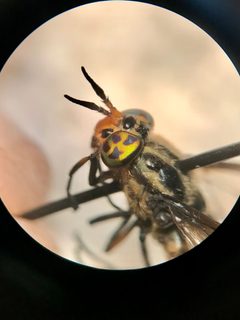
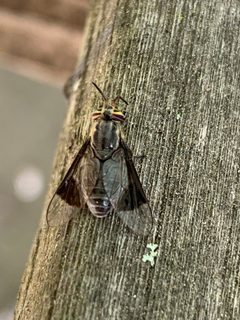
Chrysops calvus is a of deer fly in the Tabanidae, commonly known as the Bald Deer Fly. It was described by Pechuman and Teskey in 1967. The species belongs to the Chrysops, a group of biting flies known for their painful bites and distinctive patterned . Deer flies are recognized as significant biting pests of humans and livestock.
Pronunciation
How to pronounce Chrysops calvus: /ˈkrɪsɒps ˈkælvəs/
These audio files are automatically generated. While they are not always 100% accurate, they are a good starting point.
Identification
The specific epithet 'calvus' (Latin for 'bald') suggests a distinguishing feature from other Chrysops , possibly relating to reduced or absent markings on a particular body region. Positive identification requires examination of morphological characters used in the original species description by Pechuman and Teskey (1967), including details of structure, wing venation, and abdominal patterning.
Images
Distribution
Documented from Vermont, USA based on distribution records. The likely occurs in additional regions of eastern North America given the distribution patterns of related Chrysops species, though specific records are limited.
Diet
females are blood-feeders, obtaining protein meals from mammalian including humans and livestock. Adult males feed on nectar and other sugar sources.
Life Cycle
Complete with , larval, pupal, and stages. Larvae develop in aquatic or semi-aquatic environments, typically in muddy substrates of ponds, streams, or wetlands. Specific developmental details for this have not been documented separately from the general Chrysops pattern.
Behavior
females are , active during daylight hours, and exhibit strong, direct when seeking . They are persistent biters, often circling targets before landing. Like other deer flies, they may follow moving objects and respond to dark silhouettes and carbon dioxide.
Ecological Role
females function as blood-feeding that can cause significant annoyance and economic impact to livestock. They may serve as mechanical of agents between , though specific vector competence for this has not been established.
Human Relevance
Recognized as a biting pest. The painful bite of female deer flies causes irritation and can reduce outdoor recreational enjoyment and livestock productivity. No specific medical or veterinary significance has been documented for this beyond the general nuisance and biting impacts characteristic of the .
Similar Taxa
- Chrysops excitansOverlaps in geographic distribution and shares similar size and general appearance; distinguished by specific thoracic and abdominal markings and details of the pattern in live specimens
- Chrysops aterSimilar dark coloration and eastern North American distribution; requires examination of leg coloration and wing clouding patterns for separation
- Chrysops mitisSympatric in parts of range and similar in overall form; differentiated by comparative features of the and antennal structure
More Details
Taxonomic Note
The was described by Pechuman and Teskey in 1967. The Catalogue of Life lists this name as a synonym, while GBIF and NCBI recognize it as an accepted species. This discrepancy may reflect ongoing taxonomic revision or database synchronization issues within the Tabanidae.
Etymology
The specific epithet 'calvus' derives from Latin meaning 'bald' or 'hairless', likely referring to a diagnostic morphological feature such as reduced pilosity on the or compared to related .