
Rhagio lineola
Fabricius, 1794
Small Fleck-winged Snipefly
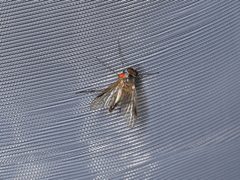
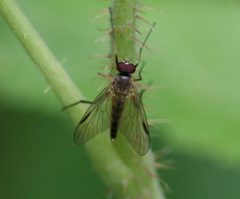
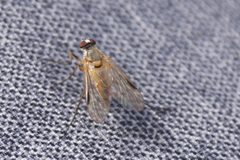
Rhagio lineola is a small snipefly in the Rhagionidae, native to the Palearctic region and introduced to eastern North America. are 5.5–8 mm in length with distinctive yellow and black coloration. The has a two-year with adults active from late May through September. Both adults and larvae are predatory, contributing to of small insects in woodland .
Pronunciation
How to pronounce Rhagio lineola: /ˈrægioʊ lɪˈniːələ/
These audio files are automatically generated. While they are not always 100% accurate, they are a good starting point.
Identification
Distinguished from the similar Rhagio notatus by smaller overall size and yellow femoral bases (R. notatus has dark femoral bases). The combination of small body size (6 mm), yellow legs with dark femoral rings, yellow scutellum with grey base, and clear wings with black stigma is diagnostic. Some in Ireland may show nearly obscured leg banding (var. monticola).
Images
Habitat
Deciduous forests, woodland, and hedgerows. often found on leaves of undergrowth and tree foliage. Larvae inhabit soil and rotting wood including dead birch logs and debris in tree cavities.
Distribution
Native to the Palearctic region with widespread occurrence across Europe, including Britain and Ireland. Introduced to the Nearctic region: first recorded in Canada (Ottawa) in 1946, now established in eastern coastal provinces of Canada and the northeastern United States.
Seasonality
active from late May (rarely early May) through September, with peak abundance from mid-June to mid-July. Extended season from May until October has been reported in some regions.
Diet
are predatory on small soft-bodied insects. Larvae are predatory, feeding on soil-dwelling .
Life Cycle
Two-year . Larvae live in soil and rotting wood (dead birch logs, tree cavity debris). occurs in spring. emerge in late May and persist through summer.
Behavior
frequently perch on leaves of undergrowth in woodland . Females construct subterranean nests in soil for oviposition.
Ecological Role
Predatory at both and larval stages, contributing to regulation of small insect in forest .
Human Relevance
Subject of sequencing as part of the Darwin Tree of Life Project. Genome assembly of 1,654.96 Mb with 97.13% scaffolded into 5 chromosomal pseudomolecules.
Similar Taxa
- Rhagio notatusSimilar size and appearance, but distinguished by larger body and dark femoral bases versus yellow femoral bases in R. lineola
More Details
Genome sequencing
sequenced as part of the Darwin Tree of Life Project: 1,654.96 Mb assembly with 97.13% scaffolded into 5 chromosomal pseudomolecules (4 + X ). Mitochondrial genome: 16.64 kb. Specimen from Cothill Fen Nature Reserve, England.
Taxonomic variant
Variety monticola Verrall described from Irish specimens with darkened leg pattern nearly obscuring the typical yellow and brown femoral banding.
Sources and further reading
- BugGuide
- Wikipedia
- GBIF taxonomy match
- iNaturalist taxon
- NCBI Taxonomy
- Catalogue of Life
- Stalk-boring insect pests - AgriLife Extension Entomology
- Bug Eric: Spider Sunday: Striped Lynx Spider
- Bug Eric: Wasp Wednesday: Anacrabro ocellatus
- Sulfoxaflor Found to Be Less Harmful to Beneficial Predators of Soybean Aphids
- Glyphosate and Acetamiprid Have Relatively Low Toxicity for Honey Bees
- A Revision of the Eastern Nearctic Species of Rhagio Fabricius (Diptera: Rhagionidae)
- The genome sequence of a snipefly, Rhagio lineola Fabricius, 1794.