
Toxomerus occidentalis
Curran, 1922
Western Calligrapher
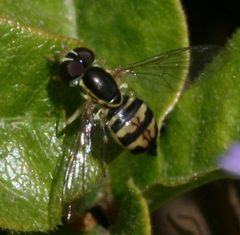
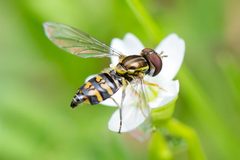
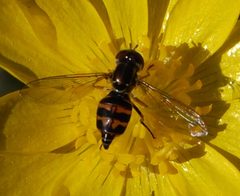
Toxomerus occidentalis, commonly known as the Western Calligrapher, is a of hover fly ( Syrphidae) native to western North America. are frequent visitors to flowers where they feed on nectar and pollen. The larvae are predatory, feeding on aphids and mites. The species was described by Curran in 1922 and is one of the more commonly observed syrphid flies in its range.
Pronunciation
How to pronounce Toxomerus occidentalis: /tɔkˈsɒmərəs ˌɒksɪˈdɛntəlɪs/
These audio files are automatically generated. While they are not always 100% accurate, they are a good starting point.
Identification
closely resemble the Eastern Calligrapher (Toxomerus geminatus), making visual distinction between these two challenging. Detailed examination of morphological characters is required for positive identification.
Images
Distribution
Western North America, ranging from British Columbia south through California, Colorado, and Texas.
Diet
Behavior
are frequently observed hovering around flowers.
Ecological Role
Similar Taxa
- Toxomerus geminatus appear very similar to Toxomerus occidentalis, requiring careful examination to distinguish.
Sources and further reading
- BugGuide
- Wikipedia
- GBIF taxonomy match
- iNaturalist taxon
- Catalogue of Life
- Bumble Bees: Feeling Impact of Climate Change | Bug Squad
- Probing the Molecular Interactions Between Western Flower Thrips and the Tomato Spotted Wilt Virus | Bug Squad
- Flabellate Grasshopper
- Good News for the Western Bumble Bee, Bombus occidentalis
- A sting to kill a cow? Red velvet ant, a.k.a. cow killer, Dasymutilla occidentalis — Bug of the Week
- Bug Eric: True Bug Tuesday: Exporting the Western Conifer Seed Bug