
Syrphus rectus
Osten Sacken, 1875
Yellow-legged Flower Fly
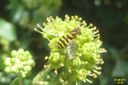
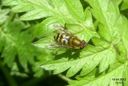
Syrphus rectus is a hover fly ( Syrphidae) commonly known as the yellow-legged flower fly. It is frequently encountered in the eastern United States and southeastern Canada, with occasional records from Europe. The exhibits of stinging Hymenoptera, with black and yellow abdominal banding. Both life stages serve ecological functions: larvae are , while visit flowers for nectar and contribute to pollination.
Pronunciation
How to pronounce Syrphus rectus: //ˈsɪrfəs ˈrɛktəs//
These audio files are automatically generated. While they are not always 100% accurate, they are a good starting point.
Identification
can be distinguished from bees and by: a single pair of wings (Hymenoptera have two pairs), very short , and the presence of an extendable sponging mouthpart () rather than chewing . The hovering is characteristic—few bees are capable of sustained hovering. Within Syrphus, identification to level requires examination of leg coloration and abdominal banding patterns; S. rectus is specifically associated with yellow legs. Final confirmation often requires examination of male genitalia or expert determination.
Images
Habitat
Gardens, agricultural fields, and natural areas with flowering plants and . Associated with plants in the sunflower (Asteraceae) where forage for nectar.
Distribution
Eastern United States and southeastern Canada. Occasional records from Europe (likely vagrant or introduced).
Seasonality
active from April through November in temperate regions.
Diet
Larvae are obligate of aphids. feed on nectar from flowers, particularly those in the Asteraceae .
Host Associations
Life Cycle
Complete . Females lay in or near colonies. Larvae pass through three instars, feeding on aphids. occurs on leaves, stems, or other substrates as a convex, pear-shaped . emerge from the pupal case. Multiple per year likely in temperate regions given the extended period.
Behavior
exhibit characteristic hovering , often remaining stationary in mid-air. Females actively seek out colonies for oviposition. Adults are and visit flowers for nectar. The exhibits , with coloration and flight resembling stinging Hymenoptera, which likely reduces pressure.
Ecological Role
agent: larval on aphids helps suppress pest in agricultural and garden . pollination services through nectar foraging on Asteraceae and other flowering plants.
Human Relevance
Beneficial insect in gardens and agriculture. Larvae provide natural of pests, reducing the need for chemical interventions. are . Frequently mistaken for bees or , which may lead to unnecessary concern or, conversely, accidental destruction of larvae during pest management activities.
Similar Taxa
- Syrphus opinatorClosely related congeneric with similar black and yellow abdominal banding; requires careful examination of leg coloration and genitalia for definitive separation.
- Honey bees (Apis mellifera) frequently mistaken for honey bees due to similar size, coloration, and flower-visiting ; distinguished by single pair of wings, short , and hovering capability.
- Other Syrphus speciesMany Syrphus share similar abdominal banding patterns; species-level identification requires examination of leg coloration, facial markings, and male genitalia.
Misconceptions
Larvae are often mistaken for caterpillars or other plant-feeding larvae and may be inadvertently destroyed during gardening activities. The maggot-like appearance of larvae and their cryptic coloration (resembling discolored leaf patches or debris) contribute to this misidentification.
More Details
Taxonomic note
Catalogue of Life lists this as having 'ambiguous synonym' status, though GBIF and other sources treat it as accepted. The species was described by Osten Sacken in 1875.
Conservation status
Not formally assessed; common and widespread in its native range.
Sources and further reading
- BugGuide
- Wikipedia
- GBIF taxonomy match
- iNaturalist taxon
- NCBI Taxonomy
- Catalogue of Life
- Just Hovering | Bug Squad
- Hello, Friday Fly Day! | Bug Squad
- Bug Squad
- Syrphus-opinator - Entomology Today
- Bug Eric: The Maggot on the Rosebush: Aphid-eating Flower Fly Larvae
- New Website Features Insects of the Greater Yellowstone Ecosystem