
Syrphus opinator
Osten Sacken, 1877
Black-margined Flower Fly
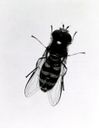
Syrphus opinator, commonly known as the black-margined flower fly, is a of hover fly in the Syrphidae. are frequently mistaken for honey bees due to their similar appearance and . The species is found in western North America, including the Greater Yellowstone and California. Like other members of the Syrphinae, its larvae are predatory, feeding on aphids.
Pronunciation
How to pronounce Syrphus opinator: //ˈsɪrfəs oʊˈpɪnətɔr//
These audio files are automatically generated. While they are not always 100% accurate, they are a good starting point.
Identification
Syrphus opinator can be distinguished from bees and by its single pair of wings, very short , and hovering capability. Bees have two pairs of wings and longer, often elbowed antennae. From other syrphid , Syrphus can be recognized by specific wing venation and abdominal patterning, though precise identification to species level often requires examination of subtle morphological features. The black-margined wing pattern helps distinguish this species from some .
Images
Appearance
resemble or bees with a black and yellow color pattern. The "black-margined flower fly" refers to dark markings along the wing margins. Males have that meet at the top of the ; in females, the eyes nearly meet. The possesses the short typical of syrphid flies. Adults have only one pair of wings, distinguishing them from the two pairs found in bees and wasps. The mouthpart is an extendable tipped with a sponge-like pad, retracted under the head when not in use.
Habitat
Found in gardens, meadows, and other with flowering plants and . Observed in the Ruth Risdon Storer Garden at UC Davis and the Greater Yellowstone . Associated with environments supporting both nectar sources for and aphid colonies for larval development.
Distribution
Western North America. Documented in California (including UC Davis Arboretum) and the Greater Yellowstone (Montana, Wyoming, Idaho). iNaturalist observations suggest broader distribution in western North America.
Seasonality
are especially conspicuous in spring and fall when peak. Active year-round in mild climates; observed in January in California.
Diet
Larvae are . feed on nectar and pollen from flowers.
Life Cycle
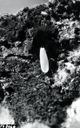
Females lay in or near colonies. Larvae pass through three instars, feeding on aphids, before pupating. The pupa is a convex, pear-shaped structure attached to leaves, stems, or other substrates. emerge from the pupal case.
Behavior
exhibit hovering , a characteristic of syrphid flies. They visit flowers for nectar and pollen, serving as . Adults warm flight muscles by basking before activity.
Ecological Role
Larvae function as agents of aphids, reducing pest in gardens and agricultural systems. contribute to pollination of various flowering plants.
Human Relevance
Similar Taxa
- Honey bees (Apis mellifera)Similar size, coloration, and flower-visiting , but bees have two pairs of wings, longer elbowed , and cannot hover persistently
- Other Syrphus speciesClose morphological similarity requiring detailed examination of abdominal patterning and wing markings for definitive identification
- Allograpta speciesSimilar appearance and as flower flies, but differ in body proportions and abdominal patterning
Misconceptions
are commonly mistaken for honey bees or due to mimicry. Larvae are often overlooked or mistaken for caterpillars or other herbivores; they may be inadvertently killed during control efforts by gardeners unaware of their beneficial predatory role.
More Details
Taxonomic Status
Listed as accepted in GBIF; Catalogue of Life notes this as a synonym, though this may reflect database synchronization issues rather than actual taxonomic revision.
Mimicry
The -like appearance represents , providing protection from that avoid stinging hymenopterans.
Sources and further reading
- BugGuide
- Wikipedia
- GBIF taxonomy match
- iNaturalist taxon
- NCBI Taxonomy
- Catalogue of Life
- Just Hovering | Bug Squad
- Hello, Friday Fly Day! | Bug Squad
- Bug Squad
- New Website Features Insects of the Greater Yellowstone Ecosystem
- Syrphus-opinator - Entomology Today
- Bug Eric: The Maggot on the Rosebush: Aphid-eating Flower Fly Larvae