
Melangyna umbellatarum
(Fabricius, 1794)
Bare-winged Halfband
Melangyna umbellatarum is a Holarctic hoverfly with a transcontinental distribution spanning Eurasia and North America. are medium-sized with distinctive orange leg markings and pale thoracic hairs that distinguish them from similar . The species is strongly associated with willow-dominated riparian and has a documented period from May through September.
Pronunciation
How to pronounce Melangyna umbellatarum: /mɛˈlaŋɪnə ˌʌmbɛləˈtɛrəm/
These audio files are automatically generated. While they are not always 100% accurate, they are a good starting point.
Identification
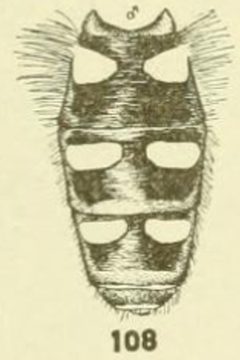
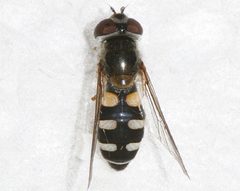
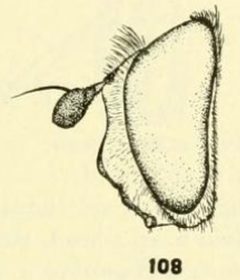
Distinguished from the similar Melangyna ericarum by: pale thoracic disc hairs (vs. many black hairs); jowls with only pale hairs below (vs. some black hairs); tergite 2 yellow side-spots extending to or over side-margins (vs. widely set back); distinct orange leg markings (vs. obscure); and reduced black bristles on .
Images
Habitat
Streams and rivers fringed by Salix (willow), including Salix carr and riparian willow stands.
Distribution
Palearctic: Fennoscandia south to Iberia, Ireland east through North, Central, and South Europe to European Russia and Siberia (east to Kamchatka). Nearctic: Alaska to Arizona (though some records may refer to M. fisherii).
Seasonality
period May to September.
Diet
Larvae predate aphids. visit flowers including white umbellifers, Foeniculum, Euphorbia, Filipendula ulmaria, and Sorbus.
Host Associations
- Salix - streams with Salix, Salix carr, riparian fringes
- Aphids - preylarval food source
Life Cycle
Larval stage predatory on aphids. active May–September.
Behavior
visit flowers for nectar and pollen. Larvae are .
Ecological Role
contribute to pollination through flower visitation. Larvae function as agents of .
Human Relevance
Potential biocontrol agent through larval . are of agricultural and wild plants.
Similar Taxa
- Melangyna ericarumSimilar overall appearance; distinguished by thoracic hair color, jowl hair color, tergite spot position, leg marking clarity, and femoral bristle pattern
- Melangyna fisheriiNearctic records of M. umbellatarum may be referable to this ; requires careful verification
More Details
Etymology
Specific epithet 'umbellatarum' refers to association with umbellifer flowers (Apiaceae).
Taxonomic Note
Nearctic distribution requires verification; some records attributed to M. fisherii.