
Dasysyrphus intrudens
(Osten Sacken, 1877)
intrudens complex
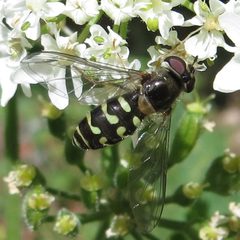
Dasysyrphus intrudens is a of hover flies ( Syrphidae) distributed across the , including North America, Europe, and parts of Asia. The name currently encompasses multiple cryptic that have not yet been formally delineated. are frequently observed, but larvae remain undescribed as of 2012, possibly due to habits.
Pronunciation
How to pronounce Dasysyrphus intrudens: /ˌdæsiˈsɪrfəs ɪnˈtruːdɛnz/
These audio files are automatically generated. While they are not always 100% accurate, they are a good starting point.
Identification
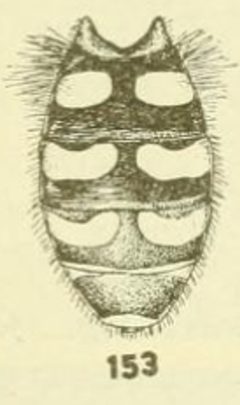
Distinguished from other Dasysyrphus by the deeply lunate, club-shaped yellow abdominal spots on segments 3–4 that are strongly constricted medially with swollen edges that never meet; the wide black facial stripe narrower than the yellow lateral portions; and the characteristic leg color pattern with hind mostly black and hind tibiae with a brown ring. The greenish metallic luster on the scutellum with dull yellowish undertone is also distinctive.
Images
Distribution
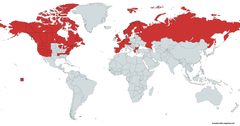
Holarctic: United States, Canada, Europe, and scattered locations in Asia.
Life Cycle
Larvae undescribed as of 2012.
Behavior
Probable larval habit inferred from comparison with known larvae of the .
Similar Taxa
- Other Dasysyrphus speciesAbdominal spot pattern of D. intrudens (deeply lunate, club-shaped, strongly constricted medially) differs from other in the which typically have simpler spot shapes or different constriction patterns.
More Details
Taxonomic status
Dasysyrphus intrudens represents a of cryptic that have not yet been formally delineated. The name is used as a placeholder pending taxonomic revision.
Larval biology
As of 2012, larvae of this remained unknown to science, which is unusual given the common occurrence of . This knowledge gap may reflect larval .