
Dasysyrphus creper
(Snow, 1895)
Arched Brusheye
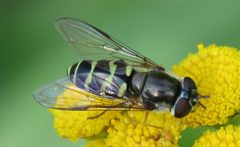
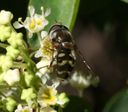
Dasysyrphus creper is a of hoverfly in the Syrphidae, first described by Snow in 1895. It belongs to the Dasysyrphus, a group of small to medium-sized syrphid flies commonly known as brusheye hoverflies. The "Arched Brusheye" refers to distinctive markings characteristic of this species. Like other members of its genus, it is likely associated with woodland and prey, though specific ecological details remain poorly documented.
Pronunciation
How to pronounce Dasysyrphus creper: //ˌdeɪ.sɪˈsɪr.fəs ˈkrɛ.pər//
These audio files are automatically generated. While they are not always 100% accurate, they are a good starting point.
Identification
The "Arched Brusheye" suggests the presence of arched or curved markings on the , a feature used to distinguish Dasysyrphus . Specific diagnostic features for D. creper relative to such as D. albostriatus or D. intrudens are not well documented in available sources. Identification to species level likely requires examination of genitalia or other subtle morphological characters.
Images
Distribution
Distribution records are not available in the provided sources. The has been documented through iNaturalist observations, suggesting presence in regions where users actively report sightings, though specific geographic range remains undocumented.
Ecological Role
As a member of the Syrphidae , this likely functions as a of aphids and other small soft-bodied insects in its larval stage, contributing to of pest . hoverflies are typically , though specific plant associations for D. creper are not documented.
Similar Taxa
- Dasysyrphus albostriatusSimilar size, coloration, and preferences; distinguished by differences in abdominal patterning and markings.
- Dasysyrphus intrudensOverlapping range and ; requires careful examination of thoracic and abdominal markings for separation.
More Details
Taxonomic History
Originally described as Syrphus creper by Snow in 1895, later transferred to the Dasysyrphus. The basionym Syrphus creper is now considered a synonym.