
Copestylum vesicularium
Curran, 1947
Iridescent Bromeliad Fly
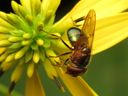
Copestylum vesicularium, commonly known as the iridescent bromeliad fly, is a of hoverfly in the Syrphidae. This species is widely distributed across the eastern half of North America. The reflects its association with bromeliad plants, which serve as larval . Like other members of the Copestylum, are likely flower visitors, though specific floral associations require further documentation.


Pronunciation
How to pronounce Copestylum vesicularium: /koʊˈpɛstɪləm vɛˌsɪkjəˈlɛriəm/
These audio files are automatically generated. While they are not always 100% accurate, they are a good starting point.
Identification
Copestylum vesicularium can be distinguished from similar syrphid flies by its iridescent coloration and association with bromeliad microhabitats. The Copestylum is characterized by with a metallic or iridescent sheen and larvae that develop in decaying plant material, particularly in bromeliad tanks. Specific diagnostic features for C. vesicularium relative to such as C. caudatum (hairy-horned bromeliad fly) require examination of subtle morphological differences in , facial structure, and abdominal patterning. Accurate identification typically requires reference to original descriptions or keys.
Images
Habitat
Associated with bromeliad plants, which provide the larval microhabitat. Bromeliads accumulate water and organic debris in their leaf axils (tanks), creating unique aquatic-terrestrial interfaces that support specialized insect . The occupies where bromeliads occur, including woodland and forested areas with appropriate plant availability.
Distribution
Widely distributed on the eastern half of North America. Records span from the eastern United States westward through the Great Plains, with the western extent of the range requiring clarification.
Host Associations
- Bromeliaceae - larval Larvae develop in water-filled leaf axils (tanks) of bromeliad plants, feeding on decaying organic matter and microorganisms within this microhabitat.
Ecological Role
As a bromeliad , contributes to nutrient cycling within bromeliad tank microecosystems. Larval activity in bromeliad tanks facilitates decomposition of accumulated organic matter. flower-visiting , if confirmed, would suggest potential pollination services, though this remains undocumented for this specifically.
Similar Taxa
- Copestylum caudatumAlso a bromeliad-associated syrphid with overlapping distribution; distinguished by hairy in males (hence 'hairy-horned bromeliad fly') and subtle differences in abdominal patterning.
- Other Copestylum speciesMultiple share bromeliad associations and metallic coloration; precise identification requires examination of genitalia and other fine morphological details.
More Details
Taxonomic history
Described by Charles Howard Curran in 1947, a prolific dipterist who described numerous syrphid .
Research needs
Detailed studies, floral associations, and precise western range limits remain poorly documented. The larval within bromeliad tanks has not been studied in detail for this specifically.