
Copestylum caudatum
Curran, 1927
hairy-horned bromeliad fly
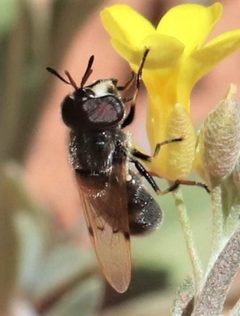
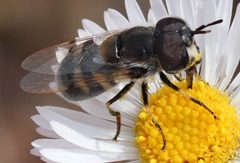
Copestylum caudatum is a syrphid fly to central western North America. The "hairy-horned bromeliad fly" suggests an association with bromeliad plants, a trait shared with other members of the Copestylum. As a hoverfly, it likely contributes to pollination services in its native range. The was described by Charles Howard Curran in 1927.
Pronunciation
How to pronounce Copestylum caudatum: /kəʊˈpɛstɪləm kɔːˈdeɪtəm/
These audio files are automatically generated. While they are not always 100% accurate, they are a good starting point.
Identification
The "hairy-horned bromeliad fly" indicates the presence of distinctive hairy projections on the , possibly the or frontal . Within the Copestylum, are often distinguished by facial and head ornamentation, coloration patterns, and abdominal markings. C. caudatum may be differentiated from by the specific structure of these "horns" and its geographic restriction to central western North America.
Images
Habitat
Associated with bromeliad plants, based on the . The occurs in the arid and semi-arid regions of central western North America where suitable bromeliad are present.
Distribution
Central western North America.
Host Associations
- Bromeliaceae - probable larval Inferred from ; bromeliad association is characteristic of the Copestylum
Similar Taxa
- Other Copestylum speciesMany Copestylum share bromeliad associations and similar body plans; C. caudatum is distinguished by its geographic range and the specific "hairy-horned" referenced in its