
Copestylum sexmaculatum
(Palisot de Beauvois, 1819)
Six-spotted Bromeliad Fly
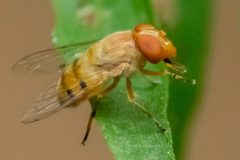
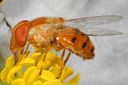
Copestylum sexmaculatum, commonly known as the six-spotted bromeliad fly, is a of hoverfly in the Syrphidae. The references its association with bromeliad plants, which serve as for its larval development. As a member of the Copestylum, it belongs to a group of syrphid flies whose larvae are typically found in phytotelmata—water-holding structures of plants such as bromeliads. are flower visitors and contribute to pollination. The species has been documented across a broad geographic range with numerous observations recorded.
Pronunciation
How to pronounce Copestylum sexmaculatum: /koʊˈpɛstɪləm sɛksˌmækjʊˈleɪtəm/
These audio files are automatically generated. While they are not always 100% accurate, they are a good starting point.
Images
Habitat
Associated with bromeliad plants, which provide phytotelmata (water-filled cavities) for larval development. The occupies environments where bromeliads occur, including tropical and subtropical forests and woodlands.
Distribution
Documented from the southeastern United States through Mexico and Central America, with observations extending into South America. The shows a broad Neotropical distribution pattern typical of many bromeliad-associated insects.
Host Associations
- Bromeliaceae - larval Larvae develop in water-filled leaf axils (phytotelmata) of bromeliad plants
Ecological Role
function as through flower visitation. Larvae contribute to nutrient cycling within bromeliad phytotelmata , where they interact with other aquatic organisms in these microecosystems.
Similar Taxa
- Copestylum caudatumSimilar bromeliad-associated syrphid fly with overlapping geographic range; distinguished by differences in abdominal patterning and terminalia structure
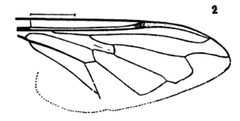
- Other Copestylum speciesMany share bromeliad-associated ; precise identification requires examination of morphological details including facial markings, wing venation, and male genitalia
More Details
Etymology
The specific epithet 'sexmaculatum' derives from Latin, meaning 'six-spotted,' likely referring to abdominal markings visible in this .