
Eristalis obscura
Loew, 1866
Dusky Drone Fly
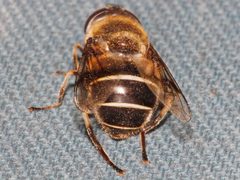
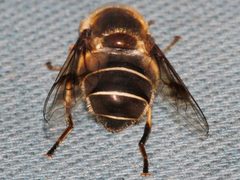
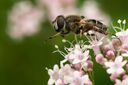
Eristalis obscura, commonly known as the dusky drone fly, is a of syrphid fly first described by Loew in 1866. It is widespread across northern North America and extends eastward through Europe to Siberia. The species exhibits the characteristic rat-tailed maggot larval form, with aquatic larvae that function as filter-feeders. Like other members of the Eristalis, are likely mimics, though specific documentation of this for E. obscura is limited.
Pronunciation
How to pronounce Eristalis obscura: //ɛrɪsˈtælis əbˈskjʊrə//
These audio files are automatically generated. While they are not always 100% accurate, they are a good starting point.
Images
Distribution
Northern North America; Europe east to Siberia. GBIF records confirm presence in Denmark, Norway, and Sweden.
Diet
Larvae are aquatic filter-feeders. diet presumed to include pollen and nectar based on -level traits, though not explicitly documented for this .
Life Cycle
are laid in aquatic or semi-aquatic environments. Larvae are of the rat-tailed type—aquatic filter-feeders with an elongated siphon for respiration. Specific details of and timing are not documented for this .
Ecological Role
Larvae contribute to nutrient cycling in aquatic environments through filter-feeding on organic matter. likely serve as , though this has not been specifically documented for E. obscura.
Similar Taxa
- Eristalis tenaxCommon drone fly; also a widespread Eristalis with rat-tailed larvae, but differs in being more and specifically documented as a and waste recycler
- Eristalis arbustorumAnother northern Eristalis with overlapping distribution; separation requires examination of subtle morphological characters not detailed in available sources
Sources and further reading
- BugGuide
- Wikipedia
- GBIF taxonomy match
- iNaturalist taxon
- NCBI Taxonomy
- To Bee or Not to Bee | Bug Squad
- Obscure Grasshopper
- A friendlier type of drone: Common Drone Fly, Eristalis tenax — Bug of the Week
- Bug Eric: Fly Day Friday: Rat-tailed Maggots
- Insect Migration (Part 1) - Buglife Blog - Buglife
- Mudo Pryfed (Rhan 1) - Buglife Blog - Buglife