
Oxycera
Meigen, 1803
soldier flies
Species Guides
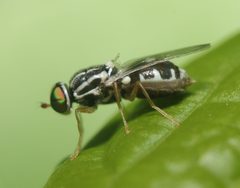
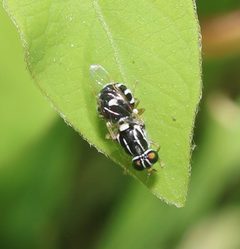
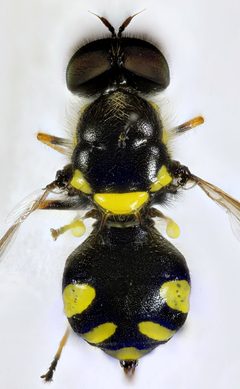
3Oxycera is a of soldier flies ( Stratiomyidae) comprising approximately 80 described distributed across the Palearctic, Afrotropical, and Oriental regions. Species within this genus are associated with wetland , where larvae develop in shallow water or moist substrates. Several species have shown recent range expansions, potentially linked to climate change. The genus is taxonomically well-established within the tribe Oxycerini and serves as a subject of ongoing distributional and ecological research.
Pronunciation
How to pronounce Oxycera: //ɒkˈsɪərə//
These audio files are automatically generated. While they are not always 100% accurate, they are a good starting point.
Images
Habitat
Wetland including ponds, ditches, and shallow water bodies. Oxycera pygmaea has been specifically documented in association with tufa springs—freshwater springs that form calcium carbonate deposits through chemical reactions with air. Some utilize adjacent terrestrial structures such as wooden fence posts for basking.
Distribution
Palearctic, Afrotropical, and Oriental regions. Documented from Europe (including Scandinavia: Denmark, Norway, Sweden), North Africa (Morocco), the Middle East (Iran: Arasbaran Forests), and East Asia (China). Specific distributional records include: Oxycera rara recently recorded in South Northumberland and Edinburgh, Scotland representing northern range expansion; O. analis, O. flava, and O. marginata recorded as new to North Africa; O. morrisii first recorded in Morocco; O. fallenii, O. meigenii, O. notata, and O. trilineata first recorded from Iran.
Seasonality
active during summer months. Oxycera rara recorded in early July in North Tyneside.
Life Cycle
Larval development occurs in aquatic or semi-aquatic environments. Specific details on developmental stages, , or larval not documented in available sources.
Behavior
have been observed basking on wooden structures such as fence posts, presumably for before moving to breeding sites. Oxycera rara has demonstrated significant capacity, with documented range expansion of 30–40 km between consecutive records and over 100 km northward expansion into Scotland within a single season.
Ecological Role
Larvae contribute to decomposition and nutrient cycling in wetland . may serve as . Specific ecosystem functions not well documented.
Human Relevance
Subject of entomological recording schemes tracking distributional changes. Range expansions of certain (notably O. rara) are being monitored as potential indicators of climate change effects on distributions.
Similar Taxa
- NemotelusBoth belong to Stratiomyidae and share similar soldier fly ; distinguished by generic-level characters in wing venation and body patterning. Documented sympatric occurrence in Arasbaran Forests, Iran.
Sources and further reading
- BugGuide
- Wikipedia
- GBIF taxonomy match
- iNaturalist taxon
- NCBI Taxonomy
- Catalogue of Life
- Sinamma-oxycera - Entomology Today
- Sinamma oxycera Archives - Entomology Today
- Surveying for the Maerdy Monster Millipede - Buglife Blog - Buglife
- Cynnal arolygon Miltroed Anghenfil y Maerdy - Buglife Blog - Buglife
- Soldierflies on the move... - Buglife Blog - Buglife
- Five News Species of Armored Spiders Discovered in Chinese Caves
- The Genera Nemotelus and Oxycera (Diptera, Stratiomyidae) in the Arasbaran Forests
- New Records of the Moroccan Soldier Flies (Diptera: Stratiomyidae) with the Description of the Male of Oxycera flava (Lindner, 1938)