
Oxycerini
Genus Guides
3- Caloparyphus
- Euparyphus
- Oxycera(soldier flies)
Oxycerini is a tribe of soldier flies ( Stratiomyidae) comprising five : Caloparyphus, Euparyphus, Oxycera, Oxycerina, and Vanoyia. These flies are characterized by their distinctive body patterns and are found across various regions including Europe, Asia, and North America. The tribe is taxonomically placed within the Stratiomyinae.
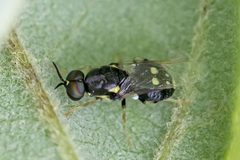
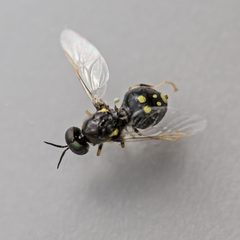
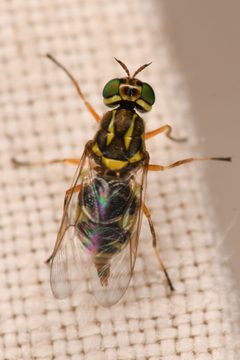
Pronunciation
How to pronounce Oxycerini: //ˌɒksɪˈsɛraɪnaɪ//
These audio files are automatically generated. While they are not always 100% accurate, they are a good starting point.
Identification
Members of Oxycerini can be distinguished from other Stratiomyidae tribes by combinations of antennal structure, wing venation patterns, and abdominal coloration. The Oxycera is particularly noted for bold yellow and black banding on the . Oxycerina was established in 2010 based on morphological differences from Oxycera, including features of the male genitalia.
Images
Habitat
within Oxycerini occupy diverse associated with wetlands, marshes, and riparian zones. Larval stages are typically found in moist or aquatic environments including muddy substrates and decaying vegetation.
Distribution
The tribe has a broad distribution across the Holarctic region, with occurring in Europe, Asia, and North America. Individual genera show varying ranges: Oxycera is primarily Palaearctic, while Caloparyphus and Euparyphus occur in the Nearctic region.
Life Cycle
Larvae develop in moist or semi-aquatic environments. emerge and are active during warmer months, though specific timing varies by and latitude.
Ecological Role
Larvae contribute to decomposition processes in wetland . may visit flowers and could serve as minor , though this has not been quantified.
Similar Taxa
- StratiomyiniBoth tribes belong to Stratiomyinae and share general soldier fly , but Stratiomyini typically lacks the bold abdominal patterning characteristic of many Oxycerini and has different antennal proportions.
- SarginiAnother tribe in Stratiomyidae with similar habits, but Sargini generally have more robust body forms and different wing venation, particularly in the arrangement of crossveins.
More Details
Taxonomic History
The tribe has undergone recent revision with the description of Oxycerina in 2010, splitting some previously placed in Oxycera based on detailed morphological study.