
Caloparyphus tetraspilus
(Loew, 1866)
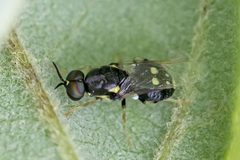
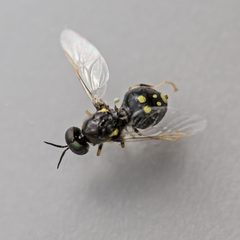
Caloparyphus tetraspilus is a of soldier fly in the Stratiomyidae. It occurs in madicolous —thin water films on rock surfaces—in eastern North America. The species was described by Loew in 1866 and is one of several Caloparyphus species adapted to this specialized aquatic microhabitat.
Pronunciation
How to pronounce Caloparyphus tetraspilus: /kæloʊˈpærɪfəs tɛtrəˈspaɪləs/
These audio files are automatically generated. While they are not always 100% accurate, they are a good starting point.
Identification
can be distinguished from other eastern North American Caloparyphus by morphological features detailed in taxonomic keys; stages are separable from congeneric using the larval key provided in James (1989). Specific diagnostic characters require examination of adult and immature specimens.
Images
Habitat
Madicolous : thin water films flowing over rock surfaces. These specialized aquatic environments occur in eastern North America.
Distribution
Eastern North America; recorded from Canada and the United States.
Life Cycle
Includes , larval, pupal, and stages. stages occur in madicolous ; detailed descriptions of all life stages are provided in James (1989).
Similar Taxa
- Caloparyphus greylockensisOccurs in the same madicolous of eastern North America and was treated in the same biological study; distinguished by morphological features of and stages.
- Euparyphus stigmaticalisOccurs in similar madicolous and shares tribe Oxycerini; belongs to different with distinct morphological characteristics.
- Euparyphus brevicornisOccurs in similar madicolous and shares tribe Oxycerini; belongs to different with distinct morphological characteristics.
More Details
Taxonomic note
The was originally described by Loew in 1866 and has been maintained in the Caloparyphus since James's revisionary work on North American Stratiomyidae.
Research context
This was included in a comprehensive biological study of Oxycerini in madicolous , which provided the primary source of ecological and information currently available.