
Exaireta
Schiner, 1867
Species Guides
1- Exaireta spinigera(garden soldier fly)
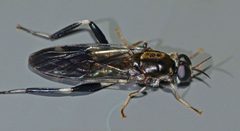
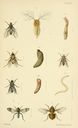
Exaireta is a of soldier flies in the Stratiomyidae, containing at least two described : Exaireta spinigera and Exaireta siliacea. The genus belongs to the Beridinae. Exaireta spinigera, commonly known as the garden soldier fly, has been investigated as a potential bioconverter of food waste, offering an alternative to the more widely studied black soldier fly Hermetia illucens for colder climate applications.

Pronunciation
How to pronounce Exaireta: /ɛɡˈzaɪ.ərɛtə/
These audio files are automatically generated. While they are not always 100% accurate, they are a good starting point.
Images
Distribution
Australia (inferred from Exaireta spinigera observations and study location)
Seasonality
Autumn and spring active , with peak activity during cooler months; larvae present in outdoor traps during winter when Hermetia illucens is inactive (based on Exaireta spinigera observations)
Behavior
Larval stages have been observed in outdoor bucket traps; larvae demonstrate ability to convert food waste into protein
Ecological Role
Potential bioconverter of organic food waste; larvae may occupy in cooler seasons when other soldier fly are inactive
Human Relevance
Exaireta spinigera has been investigated as a candidate for insect-based food waste bioconversion systems, particularly for colder temperature operations where Hermetia illucens performs poorly; larvae contain 38.6% crude protein when fed 100% fruit and vegetable waste
Similar Taxa
- Hermetia illucensBoth are soldier flies (Stratiomyidae) investigated for food waste bioconversion, but Exaireta spinigera is active at lower temperatures and has lower protein conversion
More Details
Bioconversion potential
Exaireta spinigera larvae show decreased protein content and protein conversion when fed high proportions of low-protein food waste compared to higher-protein diets, but maintain relatively high protein content (38.6% crude protein) even on 100% fruit and vegetable waste diets.
Research status
Most detailed biological information available for Exaireta spinigera; other in the remain poorly studied.