
Sphaerocera curvipes
Latreille, 1805
lesser dung fly
Sphaerocera curvipes is a of small dung fly in the Sphaeroceridae, commonly known as lesser dung flies. The species was described by Latreille in 1805 and is one of the more frequently observed members of its , with over 260 documented observations on iNaturalist. It belongs to a family specialized in exploiting decaying organic matter, particularly .
Pronunciation
How to pronounce Sphaerocera curvipes: /sfɪəˈrɒsərə ˈkɜːvɪpiːz/
These audio files are automatically generated. While they are not always 100% accurate, they are a good starting point.
Identification
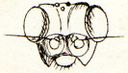
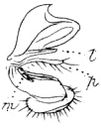
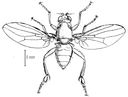
Identification to level within Sphaerocera requires examination of subtle morphological characters including genitalia and leg structure; the specific epithet 'curvipes' refers to curved legs, which may aid in distinguishing this species from . Members of Sphaeroceridae are generally small (2-5 mm), humpbacked flies with reduced wing venation. Definitive identification typically requires microscopic examination by a .
Images
Habitat
Associated with decaying organic matter, particularly , in both pastoral and natural environments.
Distribution
Recorded from Belgium (Flemish and Walloon regions) and the Azores (Faial, São Miguel); likely more widespread in Europe given the 's distribution patterns.
Ecological Role
Member of the dung fly contributing to decomposition and nutrient cycling in organic matter deposits.
Human Relevance
Forms part of the natural decomposer in agricultural and pastoral settings; no significant direct economic impact documented.
Similar Taxa
- Other Sphaerocera speciesRequire microscopic examination of male genitalia and leg for reliable separation; S. curvipes distinguished by curved leg structure implied by its .
- Other Sphaeroceridae generaSphaerocera can be separated from related by wing venation patterns and body proportions, though this requires knowledge.
More Details
Taxonomic history
Described by Pierre André Latreille in 1805, making it one of the earlier described in the Sphaeroceridae.