
Tetanocerini
Genus Guides
14- Anticheta
- Dictya(marsh flies)
- Dictyacium
- Elgiva(snail-killing flies)
- Euthycera
- Hoplodictya(marsh flies)
- Limnia
- Pherbecta
- Poecilographa
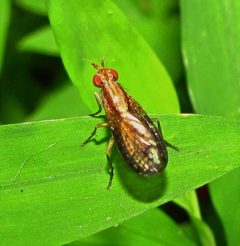
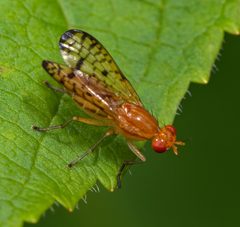
Tetanocerini is a tribe of marsh flies ( Sciomyzidae) comprising over 400 described . Members of this tribe are distinguished within Sciomyzidae by specific morphological and ecological characteristics. The tribe represents a significant radiation within the Sciomyzinae.
Pronunciation
How to pronounce Tetanocerini: //ˈtɛt.ə.nəˌsɛr.aɪ.naɪ//
These audio files are automatically generated. While they are not always 100% accurate, they are a good starting point.
Identification
Tetanocerini is distinguished from the other major tribe in Sciomyzinae, Tetanurini, primarily by wing venation patterns and genitalic structures. in Tetanocerini generally exhibit more complex male terminalia and distinct arrangements of crossveins in the wing. Detailed examination of genitalia is often required for definitive tribal assignment.
Images
Habitat
in this tribe are predominantly associated with moist or aquatic environments. Larval stages are typically found in shallow water, mud, or saturated soils where their prey occurs.
Distribution
Worldwide distribution with representatives across North America, Europe, Asia, and other regions. The tribe shows greatest diversity in temperate zones.
Diet
Larvae are , primarily feeding on freshwater mollusks including snails and slugs. This specialized diet distinguishes Tetanocerini as agents of pest mollusks.
Life Cycle
Complete with , larval, pupal, and stages. Larvae are aquatic or semi-aquatic . typically occurs in soil or detritus at the margins of water bodies.
Behavior
are generally found in vegetation near larval . Mating and oviposition occur in proximity to aquatic environments where prey mollusks are available.
Ecological Role
Significant of freshwater and terrestrial mollusks. Some have been investigated for of snails and slugs that damage agriculture or serve as .
Human Relevance
Potential utility in programs targeting pest mollusks. Research interest exists for managing snail-borne such as schistosomiasis and for agricultural pest management.
Similar Taxa
- TetanuriniThe other major tribe in Sciomyzinae; distinguished by wing venation, genitalic , and often by larval prey preferences
More Details
Species diversity
The tribe contains more than 400 described , making it the most species-rich tribe in Sciomyzidae. Taxonomic revision is ongoing.