
Oedoparena
Curran, 1934
Species Guides
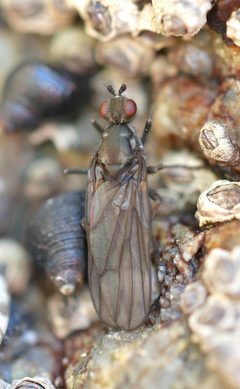
1Oedoparena is a small of flies in the Dryomyzidae, comprising three known . It is the only known dipteran genus whose larvae prey on marine barnacles. These flies function as intertidal mesopredators with documented ecological impacts on high intertidal structure.
Pronunciation
How to pronounce Oedoparena: //ˌiː.doʊ.pəˈriː.nə//
These audio files are automatically generated. While they are not always 100% accurate, they are a good starting point.
Images
Habitat
High intertidal zones of marine coastlines, specifically within barnacle . Larvae inhabit the shells of intertidal barnacles. Microhabitat temperature strongly influences larval distribution and abundance.
Distribution
Northwest Straits of Washington State, USA (documented for O. glauca). Additional occur in other regions: O. minor described from Japan, O. nigrifrons from eastern North America.
Seasonality
with peak larval abundance in late spring and early summer.
Diet
Larvae are obligate of intertidal barnacles, specifically documented on Balanus glandula and Chthamalus dalli.
Host Associations
- Balanus glandula - prey frequencies up to 22%
- Chthamalus dalli - prey frequencies up to 35%
Life Cycle
. Larvae develop within barnacle shells. and details not documented in available sources.
Ecological Role
Mesopredator in high intertidal . Larval can substantially increase barnacle mortality rates (B. glandula mortality from 5% to ~30%; C. dalli mortality from <20% to >60% under favorable thermal conditions). Potential to structure high intertidal communities, particularly in cooler microhabitats, due to cascading effects on dependent on barnacles for food and .
Similar Taxa
- Other DryomyzidaeNon-predatory ; Oedoparena is uniquely specialized as a barnacle among dipterans.
- Other intertidal dipteran larvaeNo other known dipteran preys on marine barnacles; this predatory strategy is unique to Oedoparena.