
Conopinae
thick-headed flies
Genus Guides
2- Physocephala(thick-headed flies)
- Physoconops(thick-headed flies)
Conopinae is a of flies within the Conopidae, commonly known as thick-headed flies. Members are characterized by their distinctive shape, with a broad, inflated that gives the group its . The subfamily includes two tribes: Conopini ( Conops and Leopoldius) and Physocephalini (genera Physocephala and Physoconops). These flies are known for their , with females attacking various hymenopteran .


Pronunciation
How to pronounce Conopinae: /kəˈnɒpɪˌniː/
These audio files are automatically generated. While they are not always 100% accurate, they are a good starting point.
Identification
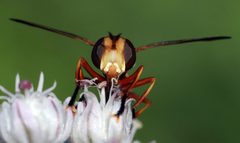
Members of Conopinae can be distinguished from other conopid by their characteristically enlarged, bulbous with a broad . The head is typically wider than the , creating a distinct 'thick-headed' appearance. are three-segmented with a terminal . The is often elongated and may display banded coloration. Wing venation includes a characteristic conopid pattern with reduced anal lobe.
Images
Distribution
Widespread across the Holarctic region, with records from North America, Europe, and Asia. Individual show varying distributions: Conops is primarily Palearctic, Physocephala occurs in both Nearctic and Palearctic regions, while Physoconops and Leopoldius have more restricted ranges.
Seasonality
activity peaks during summer months in temperate regions, generally from June through August. periods vary by latitude and elevation, with some active into early autumn in southern ranges.
Diet
have been observed feeding on nectar from flowers, particularly those of the Asteraceae and Apiaceae . Larvae are internal of Hymenoptera, with documented including bumble bees (Bombus), honey bees (Apis), and various solitary bees and .
Host Associations
Life Cycle
Females intercept hymenopterans in , depositing a single through the intersegmental using a specialized, hardened ovipositor. The larva hatches and develops internally, eventually killing the host. occurs within the host remains or in soil. The is typically , with emerging the following season.
Behavior
Females exhibit an aggressive pursuit , actively chasing and attacking hymenopterans in . Males are frequently observed patrolling flowers for nectar and seeking mates. are and are known for their fast, agile flight. Some have been observed hovering near flowers or host nesting .
Ecological Role
As of bees and , Conopinae function as regulators of their hymenopteran . They contribute to dynamics, though their impact on beneficial pollinator populations may be locally significant. flower visitation provides minor pollination services.
Human Relevance
Some parasitize commercially managed honey bees, potentially affecting productivity. The is of interest in studies of - and health. No direct medical or veterinary significance to humans.
Similar Taxa
- Myopinaelacks the characteristically enlarged, bulbous of Conopinae; head typically narrower and more
- Stylogasterinaepossesses a highly modified terminal abdominal segment with a long, rigid piercing structure not present in Conopinae