
Ptychoptera quadrifasciata
Say, 1824
phantom crane fly
Ptychoptera quadrifasciata is a of phantom crane fly in the Ptychopteridae. The 'phantom crane fly' refers to the family's characteristic hovering and delicate appearance. are typically found in moist, wooded near streams or wetlands. Larvae develop in aquatic or semi-aquatic environments with decaying organic matter. The species is native to eastern North America.
Pronunciation
How to pronounce Ptychoptera quadrifasciata: /ˌtʃɪkəˈtɪərə ˌkwɒdrɪfæsiˈɑːtə/
These audio files are automatically generated. While they are not always 100% accurate, they are a good starting point.
Identification
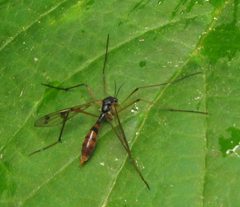
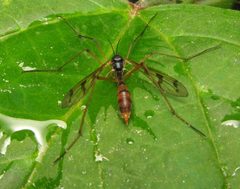
Distinguished from other Diptera by the combination of: long, dangling legs during ; hovering flight ; four-banded pattern. Separated from other Ptychoptera by the specific banding pattern and details of wing venation. Distinguished from true crane flies (Tipulidae) by more delicate build, reduced wing venation, and characteristic hovering flight rather than the erratic flight of tipulids.
Images
Appearance
have slender, delicate bodies with long legs that dangle during , creating a 'phantom-like' hovering appearance. The bears four dark longitudinal bands (fasciae), referenced in the specific epithet 'quadrifasciata' meaning 'four-banded'. Wings are clear with reduced venation typical of the . Overall coloration is generally pale with darker markings. Body length is moderate for the , typically 10-15 mm.
Habitat
Moist, shaded woodland near streams, seeps, or wetlands. frequent areas with abundant vegetation and high humidity. Larval habitat is aquatic or semi-aquatic, typically in shallow water with decaying leaves and organic detritus.
Distribution
Eastern North America; recorded from Vermont and other eastern US states. Distribution corresponds to suitable mesic forest with permanent or seasonal water sources.
Seasonality
active during warmer months; peak activity in late spring through summer. Exact varies with latitude and local climate conditions.
Life Cycle
Complete with aquatic larval stage. Larvae inhabit shallow water or saturated organic matter, feeding on decaying plant material and associated microorganisms. occurs in moist soil or at water margins. emerge and disperse to mating .
Behavior
exhibit characteristic hovering with legs extended and dangling, giving a 'phantom-like' appearance. Males form mating swarms in shaded areas near larval . Flight is slow and deliberate compared to other nematoceran flies.
Ecological Role
Larvae contribute to decomposition of organic matter in aquatic and semi-aquatic . serve as prey for aerial including birds and other insects.
Human Relevance
No significant economic impact. Occasionally noticed by naturalists and photographers due to distinctive . Not a pest of crops or structures.
Similar Taxa
- Tipulidae (true crane flies)Similar overall body plan with long legs, but distinguished by erratic , more robust build, and different wing venation
- Ptychoptera other speciesRequires examination of abdominal banding pattern and wing venation details for definitive identification
More Details
Etymology
The specific epithet 'quadrifasciata' derives from Latin 'quadri-' (four) and 'fasciata' (banded), referring to the four dark longitudinal stripes on the .
Family characteristics
Ptychopteridae, the phantom crane flies, are a small of nematoceran Diptera with distinctive hovering and aquatic larvae. The family contains approximately 50 worldwide, with highest diversity in temperate regions.