
Archytas apicifer
(Walker, 1849)
Hornworm Tachinid Fly
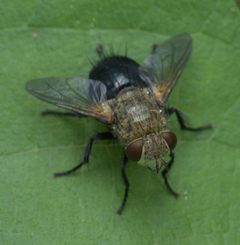
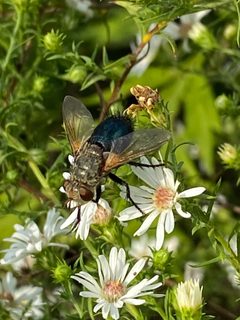
Archytas apicifer is a medium to large tachinid fly (10-15 mm) native to the Nearctic region. feed on flower nectar and serve as . The larvae are internal of caterpillars, including economically significant pest . The species was first described by Francis Walker in 1849 and is one of approximately 10,000 species in the Tachinidae.
Pronunciation
How to pronounce Archytas apicifer: //ˈɑrkɪtəs æˈpɪsɪfər//
These audio files are automatically generated. While they are not always 100% accurate, they are a good starting point.
Identification
Distinguished from similar tachinid flies by its specific combination of size, bristle patterns, and geographic distribution. The Archytas contains multiple that require careful examination of morphological features for definitive identification. flies may be observed visiting flowers, where their and association with specific plants can aid in field recognition.
Images
Habitat
Occurs in diverse terrestrial across its broad Nearctic distribution. are frequently associated with flowering vegetation where they feed on nectar. Larval habitat is determined by caterpillar presence.
Distribution
Nearctic distribution spanning Canada, the United States, Mexico, and extending south through Central America and northern South America. Documented occurrences include: Canada, United States, Dominican Republic, Saint Vincent, El Salvador, Mexico, Colombia, and Ecuador.
Seasonality
activity coincides with flowering periods of nectar sources and availability of caterpillars. Specific seasonal patterns vary across the broad geographic range.
Diet
feed on flower nectar. Larvae are internal that develop within living caterpillars, feeding on tissues.
Host Associations
- Forest tent caterpillar - larval internal
- Fall webworm - larval internal
- Tomato fruitworm - larval internal
- Corn earworm - larval internal
- Cutworms - larval internal
Life Cycle
Complete with , larva, pupa, and stages. Females deposit eggs on or near caterpillars. Larvae penetrate host body and develop internally as , eventually killing the host. Mature larvae exit the host to pupate, typically in soil or leaf litter.
Behavior
are and visit flowers for nectar feeding. Larvae exhibit , attacking and developing within caterpillar . Like other tachinids, females employ strategies to locate suitable host caterpillars for oviposition.
Ecological Role
Important agent of caterpillar . As a , helps regulate densities of herbivorous insects including several agricultural and forestry pests. nectar-feeding contributes to pollination of visited flowers.
Human Relevance
Economically beneficial as a natural enemy of pest caterpillars including tomato fruitworm, corn earworm, and cutworms. Reduces reliance on chemical in agricultural systems. No known negative impacts to humans.
Similar Taxa
- Other Archytas speciesCongeneric share similar and require detailed examination of bristle patterns and genitalia for separation
- Other TachinidaeMany tachinid flies share robust body form, bristle patterns, and ; precise identification requires knowledge
More Details
Nomenclature
The specific epithet 'apicifer' and name 'Archytas' presumably reference the Greek classical philosopher and mathematician Archytas of Tarentum (c. 428-347 BCE). The was first described by Francis Walker in 1849, not Johann Friedrich Jaennicke (1867) as sometimes reported. Walker is the accepted authority per taxonomic standards.
Taxonomic note
The has been reported under authorship by both Walker (1849) and Jaennicke (1867). Modern taxonomic databases (GBIF, Catalogue of Life, NCBI) recognize Walker (1849) as the valid authority, with Jaennicke's later usage representing a subsequent combination or misattribution.