
Dufouriini
Genus Guides
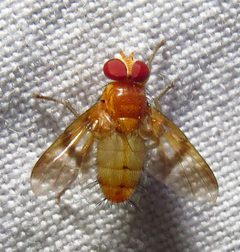
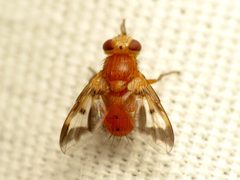
2Dufouriini is a tribe of tachinid flies comprising approximately 51 across 13 , with worldwide distribution. Members are small, dark-colored specializing in beetles (Coleoptera), particularly Chrysomelidae. Females possess highly modified terminalia adapted for introducing larvae directly into beetles. The tribe's systematic position has been historically contentious, having been placed in Phasiinae, Voriinae, and as a before current placement in Dexiinae; recent phylogenetic analyses support its monophyly and distinct tribal status.
Pronunciation
How to pronounce Dufouriini: /duːˈfɔːriːɪnaɪ/
These audio files are automatically generated. While they are not always 100% accurate, they are a good starting point.
Identification
Distinguished from other tachinid tribes by the combination of: small dark body, male nearly meeting dorsally, and especially the female terminalia modified for direct larval introduction into . Previously confused with Freraeini and Oestrophasiini, but phylogenetically distinct. Generic identification requires examination of male and female terminalia and spermathecae; Ebenia females uniquely possess cone-shaped sternite 8.
Images
Distribution
Worldwide. Documented from: Mexico (Veracruz, Tabasco, Guerrero), Rica (Guanacaste, Cartago), Nicaragua, Trinidad & Tobago, Brazil (Rio de Janeiro), Venezuela (Aragua), Colombia (Valle Río Anchicayá), Ecuador (Napo), Bolivia (Cochabamba).
Host Associations
- adult Coleoptera - specialized of beetles; females use modified terminalia to introduce larvae directly into
- Chrysomelidae - documented include Sceloenopla scherzeri, Chelymorpha alternans, and Spaethiella marginata
Life Cycle
Development occurs within . Females deposit larvae directly into hosts using specialized terminalia structures. , first instar larvae, and have been described for phylogenetic analysis, but detailed progression remains incompletely documented.
Behavior
Females actively seek beetles and use modified terminalia to achieve larval introduction into . The precise behavioral mechanisms of host location and larviposition are not well described.
Ecological Role
of beetles, contributing to of herbivorous Coleoptera, particularly leaf beetles (Chrysomelidae).
Human Relevance
Potential agents for pest leaf beetles, though specific applications are not documented.
Similar Taxa
- FreraeiniHistorically related and confused with Dufouriini; phylogenetically recovered as sister group but distinct monophyletic tribe with different associations and morphological characters
- OestrophasiiniPreviously included within or synonymized with Dufouriini; revalidated as separate monophyletic tribe based on and
- Palpostomatini Mesnilana and Rhinophoroides were removed from Dufouriini and tentatively placed here; distinguished by different morphological features and relationships
Misconceptions
More Details
Taxonomic History
Systematic placement has been highly controversial. Previously placed in Phasiinae, Voriinae, and treated as a . Currently placed in Dexiinae, though phylogenetic analyses indicate Dexiinae may be relative to Phasiinae. Composition has varied: historically included Freraeini and Oestrophasiini, now excluded. Recent changes include synonymy of Comyopsis with Ebenia, revalidation of Cenosoma as , and removal of Mesnilana and Rhinophoroides to Palpostomatini.
Phylogenetic Relationships
Within-tribe : (Rondania (Chetoptilia (Dufouria (Ebenia + Comyops)))). Tribe Dufouriini is sister to (Oestrophasiini + Freraeini), and this clade is more closely related to Phasiinae than to other Dexiinae, suggesting need for higher-level reclassification.
Genera Composition
Currently comprises 13 : Chetoptilia, Comyops (now synonymized with Ebenia), Dufouria, Ebenia, Eugymnopeza, Euoestrophasia, Jamacaria, Kambaitimyia, Mesnilana (removed to Palpostomatini), Microsoma, Oestrophasia, Pandelleia, Rhinophoroides (removed to Palpostomatini), Rondania. Cenosoma revalidated from subgenus of Oestrophasia.