
Sarcophaga sinuata
Meigen, 1826
Sarcophaga sinuata is a of flesh fly in the Sarcophagidae, first described by Meigen in 1826. It is found in the Palearctic region. As a member of the Sarcophaga, it belongs to a group of flies commonly known as flesh flies, though specific details for this species remain poorly documented. Species-level identification within Sarcophaga typically requires examination of male genitalia.
Pronunciation
How to pronounce Sarcophaga sinuata: /ˌsɑːrkoʊˈfeɪdʒə sɪˈnjuːɑːtə/
These audio files are automatically generated. While they are not always 100% accurate, they are a good starting point.
Identification
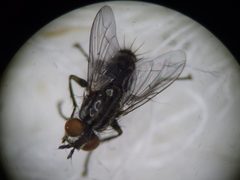
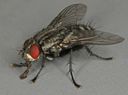
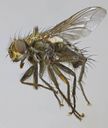
Identification to within Sarcophaga requires examination of male terminalia, as external morphological characters are generally insufficient. The Sarcophaga is characterized by gray with three longitudinal black stripes and checkered abdominal patterning, though S. sinuata-specific external diagnostic features are not documented in available sources.
Images
Distribution
Palearctic region. Distribution records include Denmark, Norway, Sweden, and Vermont (United States), though the North American records may represent introductions or misidentifications given the primarily Palearctic distribution cited in authoritative sources.
Similar Taxa
- Other Sarcophaga speciesAll Sarcophaga share highly similar external ; reliable differentiation requires male genital examination. S. sinuata cannot be distinguished from based on general appearance alone.
- Calliphoridae (blow flies)Both are medium to large calyptrate flies attracted to decomposition. Sarcophagidae typically have dull gray coloration with thoracic stripes versus metallic blue-green in many Calliphoridae, and possess four notopleural setae versus two in Calliphoridae.
- Muscidae (house flies and relatives)Similar size and general muscoid form, but Muscidae lack the three thoracic stripes and checkered typical of Sarcophagidae, and have a bare meron versus setose meron in Sarcophagidae.
More Details
Taxonomic status
Catalogue of Life lists Sarcophaga sinuata as a synonym, while GBIF and other sources treat it as accepted. This discrepancy reflects ongoing taxonomic revision within the large and complex Sarcophaga.
Identification challenges
The Sarcophaga contains hundreds of worldwide that are morphologically similar externally. As noted by de Carvalho and de Mello-Patiu (2008), species determination is complicated by uniform chaetotaxy and lack of useful external characters, leaving male genitalia as the only reliable identification feature.
Sources and further reading
- BugGuide
- Wikipedia
- GBIF taxonomy match
- iNaturalist taxon
- NCBI Taxonomy
- Catalogue of Life
- Flies, Maggots and Forensic Entomologists at Bohart Museum on Sunday, July 9 | Bug Squad
- Meloidae Holdings | Entomology Research Museum
- The Flies and Beetles That Turn Death Into Dinner
- Sarcophagidae | Beetles In The Bush
- Super Crop Challenge #4 | Beetles In The Bush