
Ravinia
Robineau-Desvoidy, 1863
Species Guides
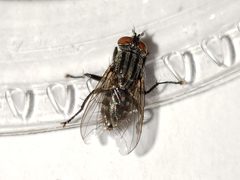
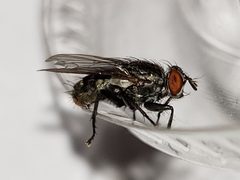
2Ravinia is a of flesh flies (Diptera: Sarcophagidae) established by Robineau-Desvoidy in 1863. within this genus exhibit diverse strategies: some are of other dipteran larvae in cattle , while others have forensic importance. Larvae of at least one species, Ravinia lherminieri, demonstrate strong resistance to through haemocytic . The genus has been recorded in North America, Europe (Denmark, Norway, Sweden), and Brazil.

Pronunciation
How to pronounce Ravinia: /rəˈvɪniə/
These audio files are automatically generated. While they are not always 100% accurate, they are a good starting point.
Images
Habitat
Associated with bovine and cattle environments; laboratory studies confirm larval development in such substrates.
Distribution
North America (Vermont, United States); Europe (Denmark, Norway, Sweden); South America (Brazil, including state of Bahia).
Host Associations
- Musca autumnalis - preyFace fly and larvae are preyed upon by Ravinia lherminieri larvae in laboratory conditions; 98% mortality achieved at :prey ratios of 10:200
- Heterotylenchus autumnalis - experimental /unsuitable host generally fails to develop in Ravinia lherminieri due to strong resistance via haemocytic
Behavior
Ravinia lherminieri larvae exhibit -dependent on face fly immatures, with mortality decreasing from 98% to 0% as volume per larva increases from 10 ml to 80 ml. Larvae can survive on bovine feces alone but show 26% higher survival when prey is available. Strong cellular immune response to includes haemocytic , tracheolar proliferation, and novel melanization of the larval anal organ.
Ecological Role
agent of face fly (Musca autumnalis) in cattle ; potential natural enemy for . Some have forensic importance.
Sources and further reading
- BugGuide
- Wikipedia
- GBIF taxonomy match
- iNaturalist taxon
- NCBI Taxonomy
- Catalogue of Life
- THE LIFE HISTORY AND PREDATORY EFFICIENCY OF RAVINIA LHERMINIERI (DIPTERA: SARCOPHAGIDAE) ON THE FACE FLY (DIPTERA: MUSCIDAE)
- Host reactions of Musca domestica, Orthellia caesarion, and Ravinia I'herminieri to the nematode Heterotylenchus autumnalis
- First record of the Ravinia almeidai (Lopes, 1946) (Diptera: Sarcophagidae: Sarcophaginae) to the state of Bahia, Brazil
- Reproductive behavior of Ravinia belforti (Prado & Fonseca,1932) (Diptera: Sarcophagidae) females reared, in isolation, in the laboratory at Rio de Janeiro, RJ, Brazil