
Lucilia silvarum
(Meigen, 1826)
common toad fly, Marsh Greenbottle Fly
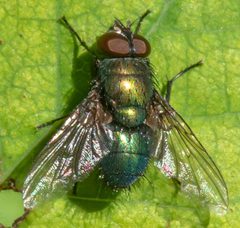
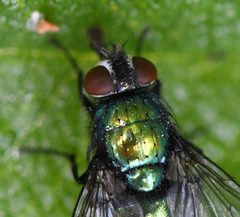
Lucilia silvarum is a in the Calliphoridae, first described by Johann Wilhelm Meigen in 1826. are 4.5–10 mm with metallic green coloration and , making them difficult to distinguish from related green bottle flies. The has a Holarctic distribution across North America and Europe. Recent research has clarified its ecological role: it is primarily saprophagous on carrion and was identified as a primary colonizer of domestic cats in experimental studies, contradicting earlier assumptions that it was strictly associated with amphibian myiasis.
Pronunciation
How to pronounce Lucilia silvarum: //luːˈsɪliə ˈsɪlvərəm//
These audio files are automatically generated. While they are not always 100% accurate, they are a good starting point.
Identification
Difficult to distinguish from other green bottle flies (Lucilia spp.) based on alone; accurate identification requires examination of specific morphological characters or molecular analysis; distinguished from L. sericata and L. cuprina by subtle differences in thoracic chaetotaxy and genitalia; historically confused with L. bufonivora, which is now recognized as the primary agent of anuran myiasis in North America rather than L. silvarum
Images
Habitat
Open grassy fields; areas with decomposing animal matter; warm-weather environments with temperatures between 24–29°C (75–85°F); associated with carrion, , and filth concentrations; saline conditions in California (incidental finding)
Distribution
Holarctic: widespread throughout North America and Europe; documented from British Columbia, Canada to southern Florida, USA; recorded in China, Denmark, Finland, southern Norway, Russia, and Canada; present in Vermont, USA; Sweden; Norway
Seasonality
Warm-weather fly; active during periods with temperatures between 24–29°C; presumably active spring through fall in temperate regions, with exact timing varying by latitude
Diet
Carrion; nectar and sweet liquids (); decomposing animal tissue; has been observed on domestic cat carcasses, rat carcasses, duck carcasses, and mice carcasses
Life Cycle
hatch in approximately one day; three larval instars: first instar at approximately 2 days, second instar at approximately 2.5 days, third instar at 4–5 days; prepupal wandering stage occurs 8–12 days after oviposition, with larvae reaching up to 12 mm; occurs after approximately 18–24 days depending on atmospheric conditions; development rates vary with temperature, humidity, and other environmental factors
Behavior
locate carrion by olfaction, attracted to sulfur-based and ammonium-rich volatile compounds; uses visual stimuli to supplement olfactory cues when locating decomposing remains; arrives at remains almost immediately after exposure; females oviposit on carrion; larvae exhibit post-feeding (wandering) before
Ecological Role
Primary colonizer of decomposing remains; contributes to decomposition and nutrient cycling; forensically relevant for estimating time of and minimum postmortem interval; part of initial wave of insects arriving at fresh remains; may prefer smaller carcasses or resources with low competition
Human Relevance
: important for estimating time of death in human and animal cases; one of the first to colonize corpses in the United States and Canada; empty indicates minimum postmortem interval of at least 20 days; relevant for animal cruelty investigations; NOT used in (medical debridement uses L. sericata, not L. silvarum)
Similar Taxa
- Lucilia sericataSimilar metallic green appearance and size; both common green bottle flies; L. sericata is the used in medicinal and is more extensively studied forensically
- Lucilia cuprinaSimilar metallic green coloration; Australian sheep ; introduced worldwide by human commerce
- Lucilia bufonivoraHistorically confused with L. silvarum; now recognized as the true agent of fatal anuran myiasis in North America, not L. silvarum; subtle morphological differences require expert examination to distinguish
- Phormia reginaBlack blow fly with different coloration but similar forensic importance; differs in being black or deep metallic blue-black rather than green; seasonal activity pattern differs (spring and fall vs. warm weather)
Misconceptions
Previously believed to cause fatal myiasis in anurans (frogs and toads) in North America; recent molecular and morphological evidence (2019–2020) demonstrates that L. bufonivora, not L. silvarum, is responsible for anuran myiasis in North America; L. silvarum appears to be strictly saprophagous in both Nearctic and Palearctic regions
Sources and further reading
- BugGuide
- Wikipedia
- GBIF taxonomy match
- iNaturalist taxon
- NCBI Taxonomy
- Catalogue of Life
- Bohart Museum Features UC Davis Forensic Entomologist Bob Kimsey | Bug Squad
- Learning About the Importance of Blow Flies Through Maggot Art | Bug Squad
- How Blow Flies Compete (or Not) for Decomposition Duties
- Entomological Medicine: Working to Bring Maggot Therapy Into Wider Use
- Bug Eric: Zebra Jumper
- Bug Eric: What's on Dat Scat?
- Lucilia bufonivora, Not Lucilia silvarum (Diptera: Calliphoridae), Causes Myiasis in Anurans in North America With Notes About Lucilia elongata and Lucilia thatuna
- Lucilia silvarum Meigen (Diptera: Calliphoridae) Is a Primary Colonizer of Domestic Cats (Felis catus)