
Lucilia bufonivora
Moniez, 1876
toadfly
Lucilia bufonivora, commonly known as the toadfly, is a whose larvae are obligate of amphibians. feed on pollen and nectar. The was historically considered Palearctic but is now established in North America, where it causes myiasis in anurans. Larvae typically enter through the nostrils of toads, eventually consuming , brain, and other tissues, leading to death.
Pronunciation
How to pronounce Lucilia bufonivora: /luˈkɪliə ˌbjuːfɒnɪˈvɔːrə/
These audio files are automatically generated. While they are not always 100% accurate, they are a good starting point.
Identification
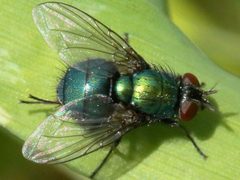
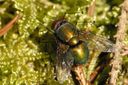
have large brown , bright metallic green and with bristly black hairs, and membranous translucent wings with dark venation. Larvae are creamy white maggots resembling those of carrion-associated blow flies. Distinguished from similar Lucilia by male genitalia, particularly structure; a key to North American species of the L. bufonivora group is available. Previously confused with L. silvarum and L. elongata in North America.
Images
Habitat
Associated with environments supporting amphibian ; found near flowers for nectar feeding. Larval development occurs within living anurans, primarily in nasal cavities and associated tissues.
Distribution
Native to northwestern Europe; established throughout southern Canada and North America. Records include Belgium, Denmark, and other European countries.
Diet
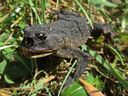
feed on pollen and nectar of flowers. Larvae are obligate feeding on living tissue of anuran , primarily common toad (Bufo bufo) but also other frog and toad .
Host Associations
- Bufo bufo - primary - common toadlarvae feed on living flesh, causing death
- Anura - - various frog and toad euryxenous , documented on multiple anuran
Life Cycle
lay near nostrils of weakened or injured toads, or in wounds. Larvae hatch and feed initially on nostril tissue, then migrate into nasal cavities. As they develop, larvae consume , brain, and other vital tissues. Temperature-sensitive: larvae thrive between 14°C and 29°C; below this range they cease feeding, exit , and burrow shallowly to hibernate. After host death and tissue consumption, larvae enter soil to pupate.
Behavior
females strategically oviposit near nostrils, showing preference for weakened or injured individuals. In the Netherlands, selectively targeted larger toads with no juveniles and very few one-year-olds affected; 8% of examined toads were parasitized.
Ecological Role
of anurans with significant -level impact on . Acts as a mortality factor for toads, particularly larger individuals.
Human Relevance
None direct; not used in (unlike L. sericata). Of medical entomology interest as a cause of amphibian myiasis.
Similar Taxa
- Lucilia silvarumPreviously confused with L. bufonivora in North America; now considered strictly saprophagous in North America rather than parasitic
- Lucilia elongataExceedingly rare historically confused with L. bufonivora; unknown
- Lucilia sericataCongeneric green bottle fly used in medical ; saprophagous/predatory on necrotic tissue rather than obligate of living
Sources and further reading
- BugGuide
- Wikipedia
- GBIF taxonomy match
- iNaturalist taxon
- NCBI Taxonomy
- Catalogue of Life
- Bohart Museum Features UC Davis Forensic Entomologist Bob Kimsey | Bug Squad
- Learning About the Importance of Blow Flies Through Maggot Art | Bug Squad
- How Blow Flies Compete (or Not) for Decomposition Duties
- Entomological Medicine: Working to Bring Maggot Therapy Into Wider Use
- Bug Eric: Zebra Jumper
- Bug Eric: What's on Dat Scat?
- Lucilia bufonivora, Not Lucilia silvarum (Diptera: Calliphoridae), Causes Myiasis in Anurans in North America With Notes About Lucilia elongata and Lucilia thatuna
- First record of Lucilia bufonivora Moniez, 1876 (Diptera: Calliphoridae) from North America and key to North American species of the L. bufonivora species group
- Lucilia bufonivora MONIEZ, 1876 – ein euryxener Amphibienparasit (Insecta: Diptera: Calliphoridae)