
Scathophaga furcata
(Say, 1823)
Furcate Dung Fly
Scathophaga furcata is a dung fly in the Scathophagidae, distributed across the Palearctic region. Larvae develop in , where they feed and complete their development. The has been documented as a significant prey item for nestling snow buntings.
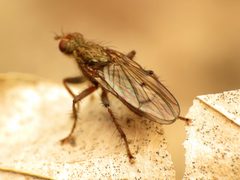
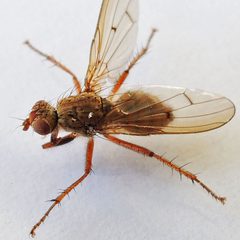
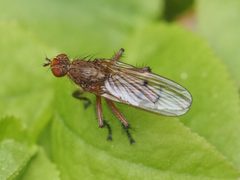
Pronunciation
How to pronounce Scathophaga furcata: //ˌskæθəˈfæɡə fərˈkɑːtə//
These audio files are automatically generated. While they are not always 100% accurate, they are a good starting point.
Images
Habitat
Associated with , particularly in environments where livestock or other large mammals are present. are found in proximity to dung pats where mating and oviposition occur.
Distribution
Palearctic region. Documented occurrences include Belgium, Brussels-Capital Region, Denmark, Norway, and Svalbard.
Diet
Larvae feed on . feeding habits are not explicitly documented for this .
Life Cycle
Females lay in . Larvae hatch and feed within the dung substrate, developing there until .
Behavior
Males have been observed defending pats from other males while intercepting receptive females for mating.
Ecological Role
Larvae contribute to decomposition. The serves as prey for birds, including nestling snow buntings.
Similar Taxa
- Scathophaga stercorariaBoth are yellow dung flies in the same with similar , but S. stercoraria is generally larger and has a more uniformly golden, fuzzy appearance; males are more conspicuously territorial on pats.
More Details
Taxonomic note
Originally described as Pyropa furcata by Say in 1823, later transferred to Scathophaga.
Sources and further reading
- BugGuide
- Wikipedia
- GBIF taxonomy match
- iNaturalist taxon
- NCBI Taxonomy
- Catalogue of Life
- Bodil Cass and 'The Curious Case of Katydids in California Citrus' | Bug Squad
- Winning PBESA Images: A Damselfly, a Blowfly and a Monarch | Bug Squad
- 2023: These Are a Few of My Favorite Things | Bug Squad
- Bug Eric: Fork-tailed Bush Katydid
- Bug Eric: Spider Sunday: Phidippus asotus
- Bug Eric: What's on Dat Scat?