
Eudasyphora
Townsend, 1911
Species Guides
1Eudasyphora is a of muscid flies established by Townsend in 1911. The genus contains at least seven described distributed primarily across Europe and North America. Eudasyphora cyanicolor, the best-studied species, has been the subject of sequencing research. Members of this genus are and frequently associated with human dwellings.
Pronunciation
How to pronounce Eudasyphora: /juːˌdæsɪˈfɔːrə/
These audio files are automatically generated. While they are not always 100% accurate, they are a good starting point.
Identification
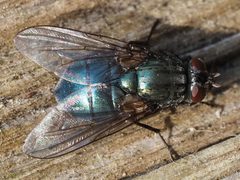
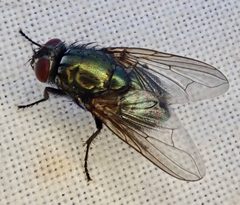
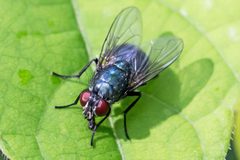
within Eudasyphora can be distinguished by metallic blue or green body coloration with contrasting pale markings on the . Eudasyphora cyanicolor specifically exhibits a deep metallic blue body with a whitish mesonotum stripe. Distinguishing Eudasyphora from the closely related Dasyphora requires examination of subtle morphological characters, particularly in male genitalia.
Images
Habitat
Woodlands, scrublands, swamps, and areas with animal . Members are and have been observed indoors.
Distribution
Widespread in Europe with highest records in the United Kingdom and Finland. Also recorded in North America including Vermont, USA, and Canada. Specific show more restricted ranges: E. canadiana and E. cordilleriana in Canada, E. occidentalis in western North America.
Seasonality
from March to November with peak activity in summer months.
Behavior
Frequent visitors to homes. Overwinters indoors. Peak activity occurs during summer.
Ecological Role
As members of Muscidae, likely contribute to breakdown and recycling of organic waste, though this has been explicitly documented only at level.
Human Relevance
association with human dwellings; enters homes for shelter.
Similar Taxa
- DasyphoraClosely related within tribe Muscini; Eudasyphora was historically treated as a subgenus of Dasyphora. Separation requires detailed morphological examination.
More Details
Genomic resources
Eudasyphora cyanicolor has a published chromosomal-level assembly of 1,450.40 Mb with 5 chromosomal pseudomolecules and a mitochondrial genome of 19.34 kb. Specimen source: Wytham Woods, Oxfordshire, UK.
Taxonomic status
Catalogue of Life lists Eudasyphora as a synonym of Dasyphora, while GBIF and NCBI treat it as an accepted . This reflects ongoing taxonomic debate regarding its rank.