
Drymeia spinitarsis
(Aldrich, 1918)
Drymeia spinitarsis is a of true fly in the Muscidae, first described by Aldrich in 1918. It belongs to the tribe Azeliini within the Muscinae. The Drymeia comprises small to medium-sized muscid flies often associated with and decomposing organic matter. Records of this species are extremely sparse, with minimal observational data available.
Pronunciation
How to pronounce Drymeia spinitarsis: /ˈdrɪmiə spɪnɪˈtɑrsɪs/
These audio files are automatically generated. While they are not always 100% accurate, they are a good starting point.
Identification
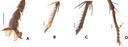
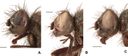
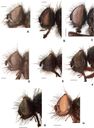
The specific epithet 'spinitarsis' refers to spiny (leg segments), a diagnostic feature distinguishing this from . Detailed external remains poorly documented in accessible literature.
Images
Distribution
Documented from the type locality; precise geographic range unknown due to limited collection records. The single iNaturalist observation suggests occurrence in North America, consistent with Aldrich's North American faunal work.
Similar Taxa
- Drymeia hamata in the same , separable by tarsal armature and male genitalic characters
- Other Azeliini genera (e.g., Azelia, Hydrotaea)Share similar general habitus and ecological preferences; require examination of tarsal spination and genitalic for definitive identification
More Details
Taxonomic note
The Drymeia was historically confused with related muscid genera. Modern classification places it in Azeliini based on male terminalia and larval . The epithet 'spinitarsis' is grammatically formed from Latin 'spina' (spine) + '' (tarsus), referring to the distinctive leg armature.
Data deficiency
This is represented by minimal modern records. The original description by Aldrich (1918) in 'Diptera of the Amaknak and Aleutian Islands' provides the primary source of morphological information. No subsequent redescriptions or ecological studies have been traced in major databases.