
Azeliini
Genus Guides
4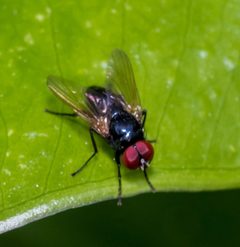
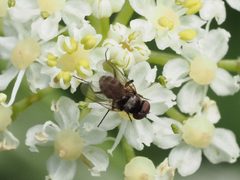
Pronunciation
How to pronounce Azeliini: /ˌæzɪˈliːnaɪ/
These audio files are automatically generated. While they are not always 100% accurate, they are a good starting point.
Identification
Azeliini can be distinguished from other tribes in Muscinae by combinations of thoracic chaetotaxy, wing venation patterns, and male genitalia structure. The tribe includes with varied morphologies: Hydrotaea often show metallic coloration, while Drymeia and Azelia species tend to be dull gray or brown. Detailed identification requires examination of specific bristle arrangements on the and scutellum, as well as features of the hypopygium in males.
Images
Distribution
The tribe has a distribution, with constituent occurring across multiple continents. Individual genera show varying geographic ranges: Hydrotaea and Ophyra are nearly worldwide in distribution, while Micropotamia is restricted to the Neotropical region.
Human Relevance
Some within Azeliini, particularly Hydrotaea and Ophyra, contain of medical and veterinary importance. Certain Hydrotaea species have been implicated in myiasis and as of in livestock facilities. Ophyra species are frequently associated with environments and decomposing organic matter.
Similar Taxa
- MusciniBoth tribes belong to Muscinae and share general muscid ; Azeliini differs in details of thoracic bristle arrangement and male genitalia structure.
- StomoxiniAnother tribe in Muscinae; Stomoxini contains blood-feeding such as Stomoxys with piercing mouthparts, whereas Azeliini genera lack such adaptations and have different ecological associations.
More Details
Taxonomic history
The tribal classification within Muscinae has undergone revision, with Azeliini historically treated as a subtribe or included within broader groupings. Current classification recognizes Azeliini as a distinct tribe based on phylogenetic and morphological evidence.
Notable genera
Hydrotaea is the most -rich in the tribe, with over 100 described species. Ophyra contains species frequently found in human-modified environments and forensic contexts.