
Pegomya winthemi
(Meigen, 1826)
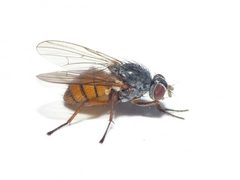
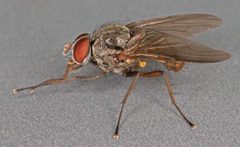
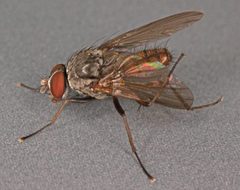
Pegomya winthemi is a small fly in the Anthomyiidae, measuring 4.25–5 mm in length. First described by Johann Wilhelm Meigen in 1829 as Anthomyia winthemi, it occurs in North America and parts of Europe including Denmark, Norway, and Sweden. The species exhibits distinctive morphological features including yellowish-red coloration on the lateral angles of the and scutellum.
Pronunciation
How to pronounce Pegomya winthemi: //ˌpɛɡoʊˈmaɪə ˈwɪnθəˌmaɪ//
These audio files are automatically generated. While they are not always 100% accurate, they are a good starting point.
Identification
Distinguished from similar Pegomya by combination of: single posthumeral bristle (not duplicated), almost bare area between posthumeral and margin, distinctly protruded lower calyptra, and yellowish-red lateral angles of thorax and scutellum. The infuscated tips and hair length relative to basal diameter provide additional diagnostic characters.
Images
Appearance
Small fly, 4.25–5 mm in length. darkened with brownish tinge at the tips (infuscated apically). lateral angles of and scutellum yellowish-red. with longest hairs slightly longer than basal diameter. Lower calyptra distinctly protruded. Scutellum disc almost bare. Posthumeral bristle single (not duplicated), with area between posthumeral and thorax margin almost bare.
Distribution
North America; Europe (Denmark, Norway, Sweden confirmed present)
Similar Taxa
- Other Pegomya speciesMany Pegomya share general body plan and size; P. winthemi distinguished by specific bristle patterns and coloration details