
Eutrichota affinis
(Stein, 1898)
root-maggot fly
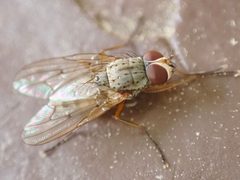
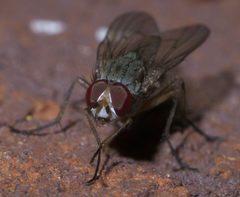
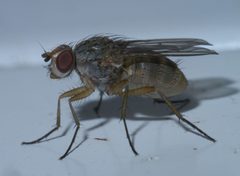
Eutrichota affinis is a of root-maggot fly in the Anthomyiidae. The larvae of this group are known as , developing in soil and feeding on plant roots. are small to medium-sized flies with relatively nondescript typical of anthomyiids. The species has been documented in the northeastern United States.
Pronunciation
How to pronounce Eutrichota affinis: /juːˈtrɪkə.tə əˈfɪnɪs/
These audio files are automatically generated. While they are not always 100% accurate, they are a good starting point.
Identification
Eutrichota affinis belongs to a whose are challenging to distinguish without detailed examination. Members of Eutrichota typically exhibit the general anthomyiid body plan: small to medium flies with grayish coloration, reduced chaetotaxy, and unpatterned wings. Species-level identification requires examination of male terminalia or other microscopic characters. Separation from related genera such as Delia and Pegomya depends on subtle differences in bristle arrangement and genital structure.
Images
Habitat
Larvae develop in soil, feeding on plant roots. are typically found in open including fields, gardens, and disturbed areas where plants grow.
Distribution
Documented from Vermont and other parts of the United States. Distribution records in GBIF indicate presence in the northeastern U.S.
Diet
Larvae feed on plant roots. Specific plant associations for E. affinis have not been documented.
Life Cycle
Complete with , larval, pupal, and stages. Larvae are subterranean root-feeders. occurs in soil.
Ecological Role
As root-feeding larvae, members of this may act as agricultural pests when are high. They contribute to soil nutrient cycling through their subterranean feeding activity.
Human Relevance
Some Eutrichota are minor agricultural pests, though E. affinis specifically has not been documented as economically significant. The anthomyiid includes several important pest species affecting crops such as onions, cabbage, and other vegetables.
Similar Taxa
- Delia spp.Another large of root-maggot flies in Anthomyiidae; distinguished by differences in male genitalia and chaetotaxy
- Pegomya spp.Related anthomyiid with root-feeding larvae; separated by subtle morphological characters including bristle patterns
- Eutrichota other speciesCongeneric require detailed examination of male terminalia for reliable identification
More Details
Taxonomic note
The was described by Stein in 1898. Eutrichota is a moderately large within Anthomyiidae, with species predominantly distributed in the Holarctic region.
Identification challenges
Like many anthomyiid flies, Eutrichota affinis is difficult to identify from photographs or casual observation. Accurate determination typically requires microscopic examination and comparison with described specimens.
Sources and further reading
- BugGuide
- Wikipedia
- GBIF taxonomy match
- iNaturalist taxon
- Catalogue of Life
- Meet 'Mantis Master Keeper' Andrew Pfeifer | Bug Squad
- Saving the Rusty-Patched Bumble Bee | Bug Squad
- Take 2 on tropical tiger moths: Spotted oleander caterpillar moth, Empyreuma affinis — Bug of the Week
- Mason bees in peril when parasitic wasps arrive – Leucospid wasp, Leucospis affinis — Bug of the Week
- A Tick that Feeds on Birds May Increase the Range of Lyme Disease
- Bug Eric: City Nature Challenge 2023 Recap