
Ochthera tuberculata
Loew, 1862
shore fly
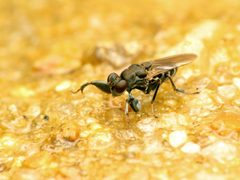
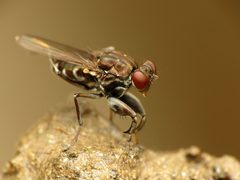
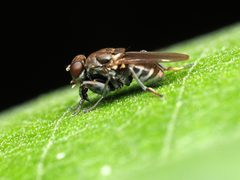
Ochthera tuberculata is a predatory shore fly in the Ephydridae, first described by Loew in 1862. are small, measuring 4-5 millimeters in length, with compact bodies and distinctive forelegs adapted for seizing prey. The is found in shallow, slow-moving aquatic where it hunts other small insects. Like other members of the Ochthera, it exhibits complex mating and has aquatic larval stages.
Pronunciation
How to pronounce Ochthera tuberculata: /ɔxˈtɛ.ra tuˌbɛr.kjuˈla.ta/
These audio files are automatically generated. While they are not always 100% accurate, they are a good starting point.
Identification
The combination of small size (4-5 mm), compact squat body, triangular , and prominently enlarged forelegs distinguishes Ochthera from most other shore flies. The foreleg modification is unique among Ephydridae and resembles that of praying mantises. Separation from other Ochthera requires examination of specific morphological details not readily summarized here.
Images
Habitat
Very shallow, trickling streams with algal mats and debris. run on shore surfaces and water margins in search of prey. Larvae are aquatic or semi-aquatic.
Distribution
United States. The Ochthera is distributed over most of North America with thirteen known ; O. tuberculata specifically recorded from the United States.
Seasonality
active from end of March through end of October.
Diet
prey on small insects including , mosquitoes, and leafhoppers that alight on shore or water surface. They also unearth midge larvae from shoreline muck. Larvae are predatory, feeding primarily on midge and mosquito larvae.
Life Cycle
Females lay singly on dead, water-logged, or partly submerged grass stems at the shore or in shallows. Larvae progress through three instars, lasting 7-11 days on average. Pupal stage is aquatic, equipped with breathing tubes, lasting 7-10 days. Egg to development takes approximately 16-21 days under laboratory conditions.
Behavior
periodically 'stretch' by reaching out, flexing, and waving front legs—possibly a threat display or recognition mechanism to avoid . Females may lash out at males attempting to mate. Males mount females from the rear, gripping the female's 'shoulders' if not rebuffed, and tap the sides of her rapidly with hind feet prior to mating. Mating lasts at least five minutes. Both adult and larval stages are active ; larvae coil around prey like a constricting snake.
Ecological Role
of small insects and aquatic larvae, including pestiferous and mosquitoes. Contributes to regulation of insect in shallow aquatic .
Human Relevance
Potential agent for mosquito and . No known negative impacts on human activities.
Similar Taxa
- Other Ochthera speciesThirteen occur in North America; require detailed morphological examination for separation.
- Other EphydridaeLack the distinctive foreleg modifications characteristic of Ochthera.
- Mantidae (mantids) of forelegs; mantids are much larger, have elongated prothorax, and belong to a different order (Mantodea).
More Details
Research history
The of Ochthera was detailed in Simpson (1975), which remains a key reference for the . Mating was described by Deonier (1972).
Etymology
epithet 'tuberculata' likely refers to -like structures, though specific derivation not documented in available sources.