
Scaptomyza
Hardy, 1850
vinegar flies
Species Guides
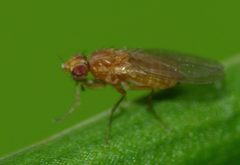
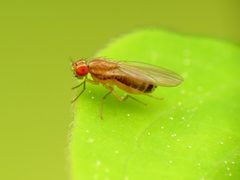
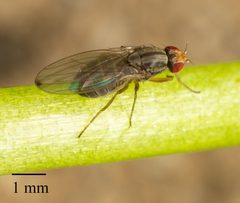
8Scaptomyza is a of vinegar flies (Drosophilidae) comprising approximately 274 described as of 2025. The genus exhibits exceptional diversification, particularly in the Hawaiian archipelago where 149 species are , representing one of the most spectacular adaptive radiations among insects. Hawaiian Scaptomyza are sister to the endemic Hawaiian Drosophila (Idiomyia), with both lineages originating from independent events. The genus is phylogenetically nested within the genus Drosophila. Species are often morphologically cryptic, requiring examination of male terminalia for definitive identification. Ecological diversity is substantial, ranging from saprophagy to specialized herbivory including leaf-mining and even on spider .
Pronunciation
How to pronounce Scaptomyza: /skæptoʊˈmaɪzə/
These audio files are automatically generated. While they are not always 100% accurate, they are a good starting point.
Identification
of Scaptomyza are frequently cryptic and lack distinct external morphological characters. Subgenera are distinguished by characters including number and size of aristal rays, number and size of thoracic setae, wing pattern, body coloration, and genitalia structure. Many species can only be reliably identified by examination of male terminalia. Species descriptions typically emphasize coloration of body parts, chaetotaxy (number, orientation, and morphometrics of bristles on and ), and genitalia form. The 21 subgenera include Alloscaptomyza, Boninoscaptomyza, Bunostoma, Celidosoma, Dentiscaptomyza, Elmomyza, Engiscaptomyza, Euscaptomyza, Exalloscaptomyza, Grimshawomyia, Hemiscaptomyza, Lauxanomyza, Macroscaptomyza, Mesoscaptomyza, Metascaptomyza, Parascaptomyza, Rosenwaldia, Scaptomyza (nominate), Tantalia, Titanochaeta, and Trogloscaptomyza.
Images
Distribution
distribution across all continents except Antarctica, with exceptional diversification in the Hawaiian archipelago where 149 of 274 described are . Non-Hawaiian species occur globally; the has been recorded from Europe, Asia, North America, South America, Africa, Australia, and New Zealand. Some species are , including Scaptomyza flava which has established in New Zealand.
Diet
Larval is diverse across the . Many are saprophagic. Leaf-mining occurs in numerous species including the Scaptomyza graminum and members of multiple subgenera. Exalloscaptomyza are on Ipomoea morning glories. Three species of Elmomyza inhabit flowers of Asteraceae. Titanochaeta has evolved exclusive on spider , with females possessing a sharp, sclerotized ovipositor for piercing egg sacs. Several Elmomyza species inhabit birdcatcher trees (Pisonia) and feed on insects trapped by the plant's adhesive surfaces. The ancestral larval ecology was likely saprophytic with subsequent specialization on particular plant and tissues.
Behavior
Hawaiian Scaptomyza lack the elaborate secondary sexual characteristics and complex courtship characteristic of Hawaiian Drosophila. Males are morphologically plain and mating is typically uncomplicated with minimal pre- or post-mating behaviors. In Scaptomyza flava, males wave wings around females and palpate females with fore ; after mating, males perform wing vibrations and zig-zag movements. Females remain stationary during courtship unless actively rejecting males. Mated males show higher courtship and mating success than virgin males, suggesting learning from experience. Both virgin and mated males may attempt to disrupt mating couples without success. Exalloscaptomyza females unusually deposit only a single or larva on Ipomoea flowers.
Ecological Role
The occupies diverse trophic including detritivory, herbivory, and . Leaf-mining such as Scaptomyza flava are significant agricultural pests of Brassicaceae crops worldwide, causing cosmetic damage that triggers prophylactic applications. Some species serve as for including Asobara persimilis (Braconidae). The exceptional radiation in Hawaii provides a model system for studying adaptive radiation, host specialization, and the evolutionary transition to herbivory.
Human Relevance
Scaptomyza flava is an economically important pest of commercial brassica crops (including broccoli, cabbage, Chinese cabbage, pak choi) and gypsophila, causing leaf mining damage that reduces marketability. The has been introduced to New Zealand where it was initially misidentified as an agromyzid , resulting in inappropriate attempts. Scaptomyza flava has become a laboratory model organism for studying herbivory evolution, plant-insect interactions, and detoxification mechanisms, particularly using Arabidopsis thaliana as a . Research on this system has illuminated the role of gut in facilitating dietary shifts and plant defense detoxification.
Sources and further reading
- BugGuide
- Wikipedia
- GBIF taxonomy match
- iNaturalist taxon
- NCBI Taxonomy
- Catalogue of Life
- Diet Detoxification in Insects | Bug Squad
- ON THE BIOLOGY AND GENETICS OF SCAPTOMYZA GRAMINUM FALLEN (DIPTERA, DROSOPHILIDAE)
- Phylotranscriptomics reveals discordance in the phylogeny of Hawaiian Drosophila and Scaptomyza (Diptera: Drosophilidae)
- A comparison of anesthesia techniques for entomological experimentation: Longevity of the leaf-mining fly pest Scaptomyza flava Fallén (Drosophilidae)
- Distributions of the Dipteran Genera Drosophila and Scaptomyza in Australia in Relation to Resource Utilization
- A comparison of anesthesia techniques for entomological experimentation: Longevity of the leaf-mining fly pest Scaptomyza flava Fallén (Drosophilidae)
- Susceptibility of <i>Scaptomyza flava</i> (Diptera Drosophilidae) to insecticides
- Mating behaviour of the European leafminer <i>Scaptomyza flava</i> (Diptera Drosophilidae)
- Phylotranscriptomics Reveals Discordance in the Phylogeny of Hawaiian Drosophila and Scaptomyza (Diptera: Drosophilidae)
- History of an invader, Scaptomyza flava (Fallen, 1823) (Diptera: Drosophilidae)
- Ecological studies ofScaptomyza flava(Fallen, 1823) (Diptera: Drosophilidae) and its parasitoids
- Artificial windbreaks and the distribution of turnip mild yellows virus and Scaptomyza apicalis (Diptera) in a turnip crop
- Evaluating the impact of insecticides on Scaptomyza flava and its parasitoid, Asobara persimilis
- Multiple origins of Hawaiian drosophilids: Phylogeography ofScaptomyzaHardy (Diptera: Drosophilidae)