
Scaptomyza terminalis
Loew, 1863
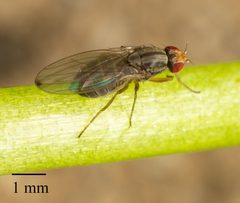
Scaptomyza terminalis is a small fly in the Drosophilidae, described by Loew in 1863. The Scaptomyza includes both microbial-feeding and herbivorous species, with some members having evolved leaf-mining habits. This species is part of a genus that has undergone evolutionary transitions to herbivory, making it relevant for studies of dietary in insects. Documentation for this specific species is limited, with only two observations recorded in iNaturalist as of the available data.
Pronunciation
How to pronounce Scaptomyza terminalis: /skæpˈtɒmɪzə tɜːrˈmɪnəlɪs/
These audio files are automatically generated. While they are not always 100% accurate, they are a good starting point.
Images
Distribution
Documentation of this in public repositories is sparse. Two observations have been recorded in iNaturalist, though specific geographic locations are not detailed in the available sources. The Scaptomyza has broad distribution across multiple continents.
More Details
Evolutionary context
The Scaptomyza is notable for containing that have independently evolved herbivory from microbial-feeding ancestors. Research on related species such as Scaptomyza flava has demonstrated that members of this genus can serve as models for studying the genetic and physiological adaptations required for the transition to plant-based diets, including the evolution of detoxification genes such as P450s and glutathione S-transferases.
Taxonomic note
The was described by Hermann Loew in 1863, a prominent 19th-century German dipterist. The specific epithet 'terminalis' likely refers to a terminal or end feature, possibly describing a morphological character of the .