
Scaptomyza graminum
Fallén, 1823
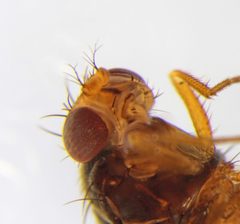
Scaptomyza graminum is a small fly in the Drosophilidae, originally described from Europe in 1823. The has been used as a laboratory model for genetic studies, particularly for genetics and chromosomal research. Wild specimens have been collected from grassy areas, though most biological knowledge derives from laboratory-maintained cultures. Under laboratory conditions at 25°C, development from to takes approximately 14 days. The species exhibits relatively sluggish compared to Drosophila melanogaster, with reduced activity and ease of handling for experimental crosses.
Pronunciation
How to pronounce Scaptomyza graminum: /skæptəˈmaɪzə ˈɡræmɪnəm/
These audio files are automatically generated. While they are not always 100% accurate, they are a good starting point.
Images
Habitat
Laboratory cultures are maintained on standard Drosophila medium. Wild collections have been made from grassy areas, specifically near Madison, Wisconsin, USA.
Distribution
Originally described from Europe. Documented wild collections from grassy areas near Madison, Wisconsin, USA. Distribution records from the Azores (Faial, Flores, Pico, São Jorge, São Miguel).
Diet
In laboratory settings, larvae feed on standard Drosophila culture medium containing agar-agar, corn meal, molasses, and yeast. require live yeast supplementation for optimal and production. Natural feeding in the wild is not documented.
Life Cycle
Under laboratory conditions at 25°C: hatch in approximately 24 hours; larval period lasts approximately 5 days; pupal period lasts approximately 7 days; total egg to development takes approximately 14 days. Adults survive 3–4 weeks under laboratory conditions.
Behavior
exhibit relatively sluggish compared to Drosophila melanogaster, with reduced inclination to fly. Females show markedly reduced production without live yeast supplementation. The is easily handled for genetic crosses due to its calm behavior.
Human Relevance
Used as a laboratory organism for genetic research, particularly in genetics and studies of chromosomal and crossover frequencies. No documented agricultural or economic significance.
Similar Taxa
- Scaptomyza flavaBoth are herbivorous Scaptomyza used in laboratory studies of Drosophilidae genetics and evolution, though S. flava has been more extensively studied as a leaf-mining herbivore model with Arabidopsis thaliana.
- Drosophila melanogasterBoth are Drosophilidae used in laboratory genetics; S. graminum is described as more sluggish and less inclined to fly, making it easier to handle for crosses.
Sources and further reading
- BugGuide
- GBIF taxonomy match
- iNaturalist taxon
- NCBI Taxonomy
- Diet Detoxification in Insects | Bug Squad
- Aboveground Pests - AgriLife Extension Entomology
- Stem- and Leaf- Feeding Insects - AgriLife Extension Entomology
- Schizaphis graminum Archives - Entomology Today
- Schizaphis-graminum - Entomology Today
- Open-Access Article Takes a Closer Look at Crop-Damaging Greenbugs
- ON THE BIOLOGY AND GENETICS OF SCAPTOMYZA GRAMINUM FALLEN (DIPTERA, DROSOPHILIDAE)