
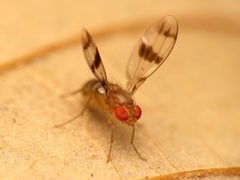
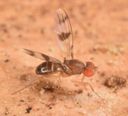
Chymomyza amoena
(Loew, 1862)
A Nearctic drosophilid fruit fly native to eastern United States forests. It has established as an in Europe since its discovery in former Czechoslovakia in 1975, subsequently spreading to Switzerland, Italy, and German border regions. The exhibits a distinctive ecological strategy: breeding in damaged or parasitized nuts and fruits rather than relying solely on fermenting substrates. This behavioral constancy for interspecies dependency—exploiting substrates pre-conditioned by other insects—has enabled it to occupy a vacant in European .

Pronunciation
How to pronounce Chymomyza amoena: /kaɪˈmɒmɪzə əˈmoʊnə/
These audio files are automatically generated. While they are not always 100% accurate, they are a good starting point.
Identification
A small drosophilid fly distinguished from and other European drosophilids by its specialized association with parasitized fruits and nuts rather than fermenting substrates. The is attracted to banana . Precise morphological diagnostic features are not documented in available sources.
Images
Habitat
Eastern US deciduous forests; European orchards and forests. Breeding substrates include black walnut husks, native crabapples, domestic apples, ornamental crabapples, acorns, and chestnut forests. Has successfully colonized domestic including apple orchards in northern Switzerland and Italy's Valtellina region.
Distribution
Native to eastern United States. in Europe: first recorded in former Czechoslovakia (1975), Switzerland's Canton Ticino (1988), subsequently spreading to northern Switzerland, Italy's Lombardy Province (Valtellina region by 2000), and German border regions. GBIF records additionally indicate presence in Montenegro, Serbia, Austria, and Belgium.
Seasonality
Breeding occurs from spring and summer through autumn. Overwinters in the third instar larval stage.
Diet
Breeds in damaged or parasitized nuts and fruits. Documented breeding substrates include fallen unripe and ripe frassy apples, acorns, black walnut husks (Juglans nigra), native crabapples (Malus coronaria), domestic apples (Malus domestica), and ornamental crabapples. Attracted to banana .
Host Associations
- Juglans nigra - breeding substrateblack walnut husks used for and breeding
- Malus coronaria - breeding substratenative crabapple
- Malus domestica - breeding substratedomestic/imported apple; key in invaded European orchards
- Malus spp. (ornamental crabapples) - breeding substrateornamental varieties utilized
- Quercus spp. - breeding substrateacorns used as breeding substrate
- Castanea spp. - breeding substratechestnut forests provide
Life Cycle
Overwinters as third instar larva in various substrates including nut husks and fruit remains. Breeding activity extends from spring through summer into autumn.
Behavior
Exhibits behavioral constancy for interspecies dependency: female oviposition in firm substrates is mediated by prior insect attack. Does not rely solely on fermenting substrates, unlike most drosophilids. Principal drosophilid breeding in parasitized fruits and nuts in both native and invaded ranges.
Ecological Role
Occupies a distinctive as the principal drosophilid exploiting parasitized fruits and nuts. In Europe, has entered a vacant niche unexploited by native drosophilids. Spread facilitated by pest that attack fruit and nut substrates, creating suitable breeding conditions.
Human Relevance
Recognized as an in European orchards, particularly apple orchards in Switzerland and Italy. Its spread is facilitated by agricultural pests that damage fruits, potentially complicating .
Similar Taxa
- Other Chymomyza species in the same ; C. amoena distinguished by its specific associations and European distribution
- European native drosophilidsC. amoena occupies a unique exploiting parasitized firm fruits and nuts, unlike native that rely primarily on fermenting substrates
Sources and further reading
- BugGuide
- Wikipedia
- GBIF taxonomy match
- iNaturalist taxon
- NCBI Taxonomy
- Catalogue of Life
- Bembicid Holdings | Entomology Research Museum
- Bug Eric: Our (New) House
- Buprestidae | Beetles In The Bush | Page 6
- Host Shifts of Chymomyza amoena (Diptera: Drosophilidae)
- Behavioral constancy for interspecies dependency enables Nearctic Chymomyza amoena (Loew) (Diptera: Drosophilidae) to spread in orchards and forests in Central and Southern Europe