
Chymomyza
Czerny, 1903
Species Guides
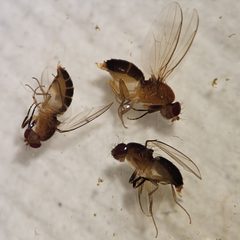
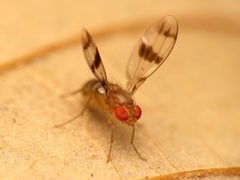
3Chymomyza is a of vinegar flies in the Drosophilidae, containing approximately 60 described distributed across multiple continents. Species within this genus exhibit diverse ecological specializations, including mycophagy (fungal spore feeding) and exploitation of damaged or parasitized fruits and nuts. Some species, such as C. amoena, have demonstrated potential, establishing in Europe from North American origins. The genus is notable for complex male-male combat involving modified forelegs used as visual signals and physical weapons.
Pronunciation
How to pronounce Chymomyza: /kaɪmoʊˈmaɪzə/
These audio files are automatically generated. While they are not always 100% accurate, they are a good starting point.
Identification
Chymomyza can be distinguished from other Drosophilidae by their association with specific microhabitats—particularly fungal fruiting bodies or damaged nuts and fruits—rather than the decaying vegetable matter typical of many drosophilids. Males of some species possess conspicuously marked forelegs and, in C. exophthalma, notably broad used in aggressive displays. The lacks the prominent red coloration characteristic of Drosophila melanogaster and related species. Accurate species-level identification requires examination of male genitalia and other subtle morphological characters.
Images
Habitat
vary by : C. mycopelates and C. exophthalma inhabit sites near mushroom fruiting bodies; C. amoena occupies eastern North American forests, orchards, and domestic habitats with damaged or parasitized nuts and fruits, including black walnut husks, crabapples, and acorns. European of C. amoena occur in apple orchards, chestnut forests, and old orchard sites.
Distribution
Native distribution includes North America (eastern United States), Europe, and Asia (Japan, Taiwan). C. amoena has been introduced to Europe, with first records from former Czechoslovakia in 1975, subsequent spread to Switzerland by 1988, and establishment in northern Italy by 2000. GBIF records indicate presence in Denmark, Norway, Sweden, and Vermont, USA.
Seasonality
C. amoena breeds from spring through autumn; overwinters as third-instar larvae. Other ' seasonality patterns are not well documented.
Diet
-specific: C. mycopelates and C. exophthalma feed on fungal spores collected from mushroom fruiting body surfaces using forelegs. C. amoena breeds in damaged or parasitized nuts and fruits, utilizing frassy apples, acorns, black walnut husks, and crabapples as larval substrates. of C. amoena are attracted to banana but maintain specific breeding substrate requirements.
Host Associations
- Juglans nigra - breeding substrateblack walnut husks used by C. amoena for larvae
- Malus coronaria - breeding substratenative crabapples used by C. amoena
- Malus domestica - breeding substratedomestic apples, including fallen unripe and ripe frassy fruit
- Castanea - chestnut forests occupied by introduced C. amoena in Europe
- Fungi (fruiting bodies) - food sourcemushrooms used by C. mycopelates and C. exophthalma for spore collection
Life Cycle
C. amoena overwinters in the third instar larval stage within durable substrates such as black walnut husks and crabapples. Complete details for most are unknown. Larval development occurs within firm, damaged, or insect-parasitized fruits and nuts rather than soft decaying matter.
Behavior
Males of C. mycopelates and C. exophthalma engage in combat at feeding and mating sites, using brightly marked forelegs as visual signals and physical weapons to strike and grasp opponents. C. mycopelates males -butt or push during intense battles; C. exophthalma males display stereotyped threatening postures with broad heads and forelegs folded against the . Courtship in C. mycopelates involves tactile and possibly visual foreleg gestures. Both sexes of mycophagous sweep mushroom surfaces with forelegs to collect spores, then remove spores with mouthparts. C. amoena maintains behavioral constancy for interspecies dependency, requiring prior insect damage to firm substrates before oviposition.
Ecological Role
Mycophagous function as fungal spore consumers and potential dispersers. C. amoena occupies a vacant in Europe, as native European drosophilids do not exploit parasitized fruits and nuts; its invasion success is facilitated by pest species that create suitable oviposition substrates through fruit and nut damage.
Human Relevance
C. amoena has established as an in European orchards and forests, potentially impacting agricultural and forest through competition and nutrient cycling in damaged fruits. The ' attraction to banana suggests possible minor nuisance in domestic settings, though it does not infest sound commercial fruit.
Similar Taxa
- DrosophilaBoth belong to Drosophilidae and share small body size, but Chymomyza lack the prominent red coloration of Drosophila melanogaster and are ecologically specialized for firmer, damaged substrates or fungal resources rather than soft decaying vegetable matter.
- LeucophengaBoth contain mycophagous , but Chymomyza exhibits distinctive male combat involving modified forelegs and structures not reported in Leucophenga.
More Details
Invasion biology
C. amoena represents a well-documented case of intercontinental invasion facilitated by availability. Its spread in Europe since 1975 demonstrates how behavioral constancy—maintaining dependence on insect-damaged substrates even after founder effects—can enable establishment in novel ranges when appropriate ecological conditions (pest activity on fruits and nuts) are present.
Morphological allometry
In C. exophthalma, male width shows positive allometry (disproportionate increase with body size), but foreleg segments used as signals and weapons do not, contradicting theoretical predictions that such structures would exhibit steep allometric scaling. This suggests that selection on signal and weapon function may operate differently than predicted by standard models.
Sources and further reading
- BugGuide
- Wikipedia
- GBIF taxonomy match
- iNaturalist taxon
- NCBI Taxonomy
- Catalogue of Life
- Bug Eric: Our (New) House
- Host Shifts of Chymomyza amoena (Diptera: Drosophilidae)
- Behavioral constancy for interspecies dependency enables Nearctic Chymomyza amoena (Loew) (Diptera: Drosophilidae) to spread in orchards and forests in Central and Southern Europe
- Natural history and behavior of Chymomyza mycopelates and C. exophthalma (Diptera: Drosophilidae), and allometry of structures used as signals, weapons, and spore collectors