
Condylostylus caudatus
(Wiedemann, 1830)
Condylostylus caudatus is a of long-legged fly in the Dolichopodidae. It is a small, metallic-colored predatory fly commonly observed darting over vegetation in sunny . As a member of this diverse family, it preys on other small insects. The species was first described by Wiedemann in 1830.
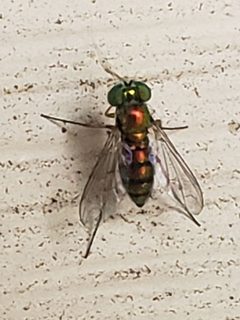
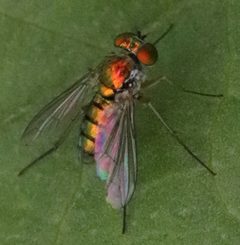
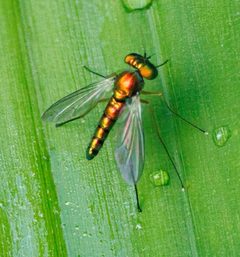
Pronunciation
How to pronounce Condylostylus caudatus: /ˌkɒn.dɪ.loʊˈstaɪ.ləs kɔːˈdeɪ.təs/
These audio files are automatically generated. While they are not always 100% accurate, they are a good starting point.
Images
Diet
Predatory on other small insects.
Behavior
are active during daylight hours and are known for their rapid, darting over vegetation. They rarely remain stationary, making observation and photography challenging.
Ecological Role
of small insects, contributing to natural pest control in gardens and forest edge .
Human Relevance
Valued as beneficial garden allies due to predatory habits that help control pest insect .
Similar Taxa
- Other Condylostylus speciesShare -level traits including metallic coloration, long legs, and predatory ; -level identification typically requires examination of male genitalia.
- Dolichopus speciesAlso in Dolichopodidae with similar overall appearance; males of Dolichopus possess distinctive ornamented front used in , which are absent in Condylostylus.
- Hydrophorus speciesRelated dolichopodids that occur on water surfaces rather than vegetation; exhibit skating on puddle and lake surfaces.
More Details
Taxonomic Note
Condylostylus caudatus is listed at the rank of 'complex' in some databases (e.g., iNaturalist), suggesting potential unresolved taxonomic issues or cryptic within this lineage.
Identification Challenges
-level identification within Dolichopodidae generally requires examination of male genitalia. The male's claspers and related structures are visible as forward-protruding appendages at the abdominal tip.