
Amblypsilopus
Bigot, 1888
Species Guides
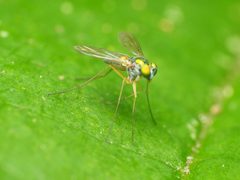
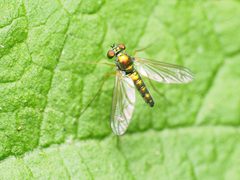
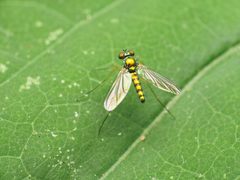
9Amblypsilopus is a large of long-legged flies (Dolichopodidae) containing approximately 350 described . The genus is distributed across tropical and subtropical regions worldwide, with particularly high diversity in the Afrotropical region where about 60 species occur, including 25 on Madagascar alone. The genus is possibly polyphyletic and requires further taxonomic revision. Species identification relies heavily on male genitalia , particularly the surstylus and , along with male secondary sexual characters on the legs.
Pronunciation
How to pronounce Amblypsilopus: /ˌæm.blɪˈsɪl.ə.pəs/
These audio files are automatically generated. While they are not always 100% accurate, they are a good starting point.
Identification
Males are distinguished from other dolichopodid primarily by the of the surstylus and (components of the male terminalia). Male secondary sexual characters on the legs, such as modified bristles or color patterns, provide additional diagnostic features. -level identification requires examination of these genitalic structures and leg modifications.
Images
Distribution
Pantropical and subtropical distribution with records from the Afrotropical region (approximately 60 , including 25 on Madagascar), Indo-Pacific region, and the Americas (including the United States). Western Indian Ocean species are associated with three species groups: the Indo-Pacific A. pallidicornis group, the Pantropical A. abruptus group, and the Madagascan A. stuckenbergi group.
Similar Taxa
- ChrysosomaSome formerly placed in Amblypsilopus have been transferred to Chrysosoma; both belong to Sciapodinae and share similar body plans, requiring careful examination of male genitalia for separation.
More Details
Taxonomic status
The is possibly polyphyletic and may require subdivision or revision as phylogenetic studies progress. Several have been synonymized or transferred to other genera, and some historical names are considered nomina dubia.
Species groups
Western Indian Ocean are classified into three informal groups: the Indo-Pacific A. pallidicornis group, the Pantropical A. abruptus group, and the Madagascan A. stuckenbergi group.