
Dolichopodinae
long-legged flies
Genus Guides
7Dolichopodinae is a of predatory flies in the Dolichopodidae, characterized by distinctive morphological features including setae on the scape of the and modified male terminalia. The subfamily contains over 2,000 described across approximately 50 , including the large genus Dolichopus. Molecular phylogenetic studies have revealed complex relationships within the group, with some traditionally recognized genera proving polyphyletic.
Pronunciation
How to pronounce Dolichopodinae: /ˌdɒlɪkoʊˈpɒdɪniː/
These audio files are automatically generated. While they are not always 100% accurate, they are a good starting point.
Identification
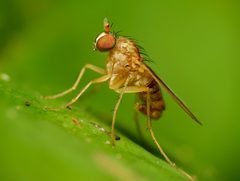
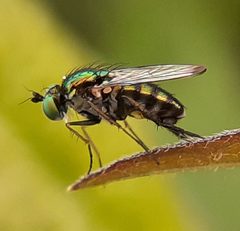
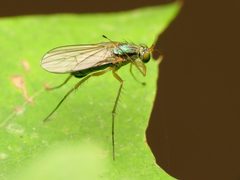
with setae on the surface of the scape; middle and hind with setae on the surface near the apex; male postabdomen typically large, forming a peduncle and folded ventrally beneath the .
Images
Habitat
Diverse; includes wet such as streams and lakes for some (e.g., Dolichopus), and sandy coastal beaches for others (e.g., Phoomyia near ghost crab burrows).
Distribution
; particularly diverse in the Palaearctic region with over 300 . Documented from Inner Mongolia, China; Sri Lanka; Thailand; and globally across temperate and tropical regions.
Diet
Predatory on other insects; in the Dolichopus are known .
Ecological Role
Natural enemies of insects; potential agents in some .
Similar Taxa
- other Dolichopodidae subfamiliesDistinguished by the combination of antennal scape setae, femoral setation pattern, and male postabdominal structure
Sources and further reading
- BugGuide
- Wikipedia
- NCBI Taxonomy
- Catalogue of Life
- Hypotheses from mitochondrial DNA: congruence and conflict between DNA sequences and morphology in Dolichopodinae systematics (Diptera : Dolichopodidae)
- Morphological Description and Potential Geographic Distribution of the Genus Dolichopus Latreille (Diptera, Dolichopodidae, Dolichopodinae) in Inner Mongolia, China
- <i>Phoomyia</i>, a new genus of Dolichopodinae from the Oriental Region (Diptera: Dolichopodidae)
- The genus Hercostomus Loew (Diptera, Dolichopodidae, Dolichopodinae) from Inner Mongolia, China, with the description of two new species.